
Luxury home scenting is defined as the deliberate use of layered fragrance delivery methods to create a sophisticated, consistent ambient scent experience in a living space. The good news for homeowners and renters is that affordability and luxury are fully compatible here. The global home fragrance market is projected at $9.93 billion in 2026, which reflects how mainstream premium scenting has become. This affordable luxury home scenting guide covers the products, techniques, and placement strategies that replicate high-end ambiance without the high-end price tag. The industry term for the approach is “ambient scent design,” and it applies equally to a studio apartment and a five-bedroom home.
What products do you need for affordable luxury home scenting?
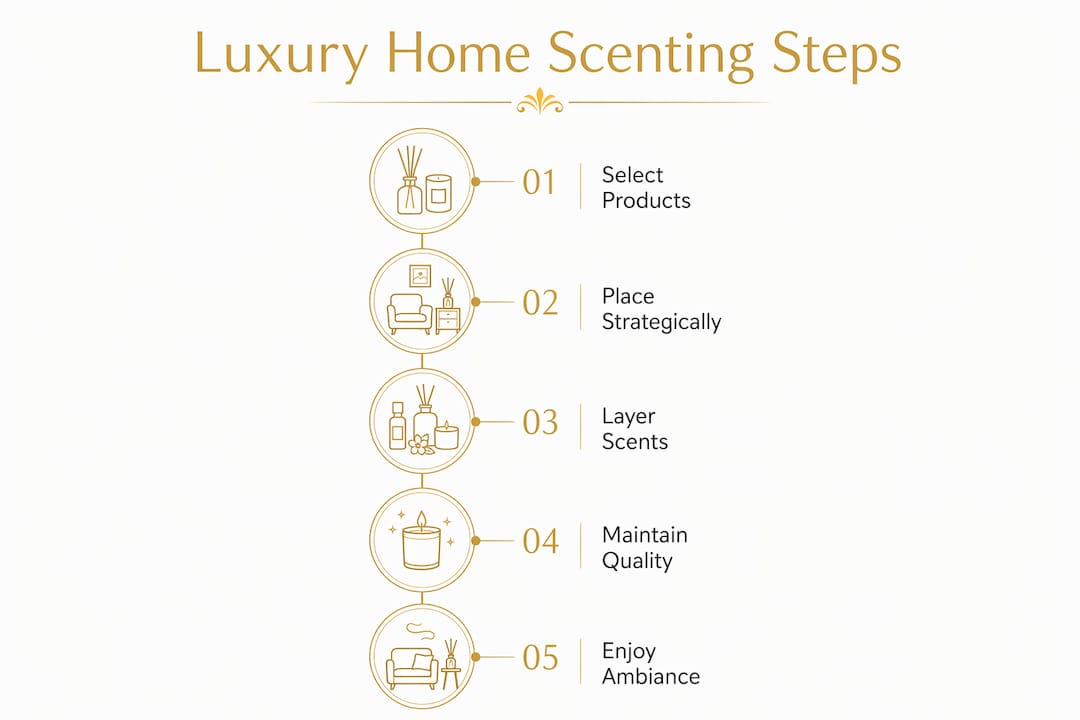
The right product mix is the foundation of any premium home fragrance checklist. You do not need one expensive device. You need a few versatile, well-chosen tools that each serve a different purpose in the room.
32% of fragrance consumers prefer versatile product sizes so they can mix and match scents across rooms rather than apply one uniform profile throughout the home. That preference reflects a real truth: different rooms have different functions, and their scents should reflect that.
The four core product types
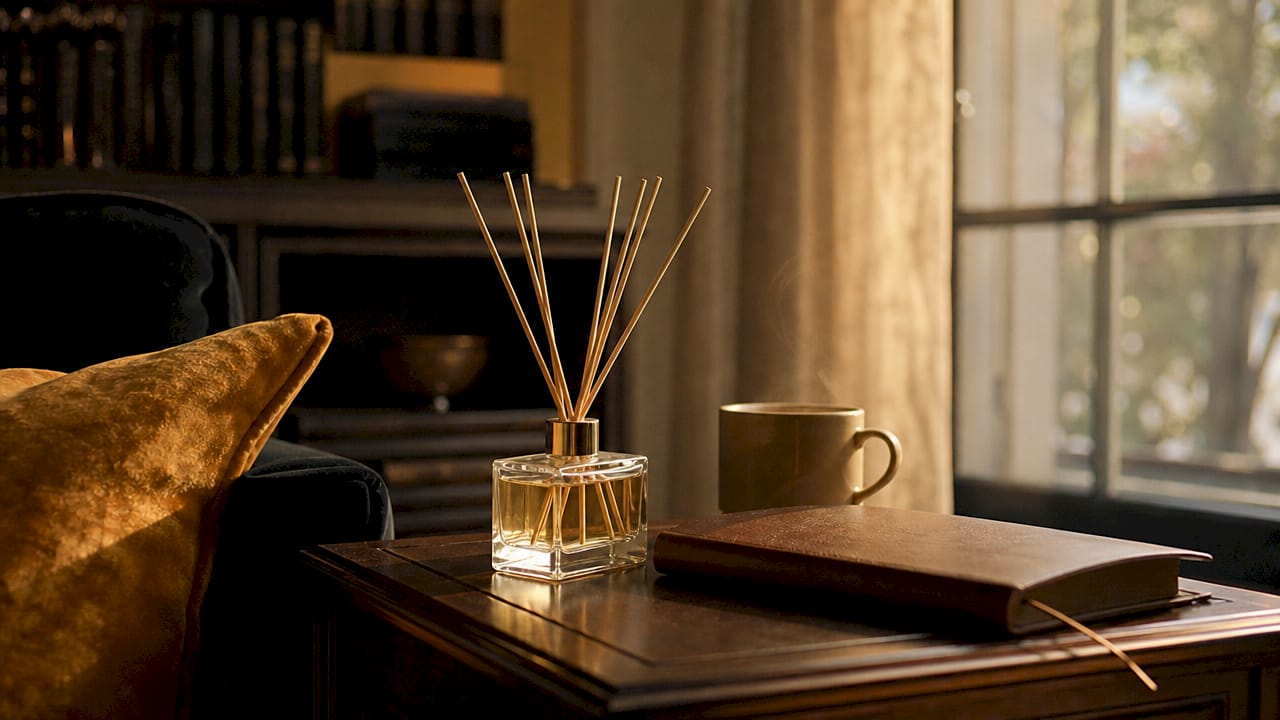
Reed diffusers are the workhorses of ambient scent design. They release fragrance passively and continuously, making them ideal for entryways, hallways, and bedrooms where you want a consistent background note. Dorianescents specializes in handcrafted reed diffusers with profiles ranging from vanilla and lemongrass to aquatic and earthy blends, giving you genuine variety without buying into multiple brands.
Cold-air nebulizing diffusers represent the gold standard for pure scent delivery. They use pressurized air to atomize fragrance oil without heat or water, which preserves the full chemical complexity of the oil. Premium cold-air diffusers cover 1,000 to 1,500 square feet with a dry mist at noise levels under 38 dB. That coverage makes them worth the upfront cost for open-plan living areas.
Wax melts and candles add visual warmth alongside scent. Candles need 1–2 hours of burn time to develop a full melt pool and deliver consistent scent throw. Burning them for less than that leaves a tunneled wax column and weak diffusion.
Fabric sprays are the most affordable and flexible option. A few spritzes on curtains, cushions, or a rug layer fragrance into textiles that release scent slowly as the room warms up.
| Product type | Ease of use | Relative cost | Scent throw | Maintenance |
|---|---|---|---|---|
| Reed diffuser | Very easy | Low to medium | Moderate, continuous | Flip reeds weekly |
| Cold-air nebulizer | Moderate | Medium to high | Strong, wide coverage | Clean monthly |
| Candle | Easy | Low to medium | Strong when burning | Trim wick before each use |
| Wax melt | Easy | Very low | Moderate | Replace wax regularly |
| Fabric spray | Very easy | Very low | Light, short-lived | None |
Pro Tip: Buy one reed diffuser and one fabric spray in complementary scents before investing in a nebulizing diffuser. This lets you test a scent combination in a room with minimal cost before committing to a larger system.
How does scent stacking create a luxury fragrance effect?
Scent stacking is the practice of layering multiple fragrance sources in a single space to create depth, complexity, and the kind of multi-dimensional scent profile you encounter in high-end hotels and boutiques. A single candle or a single diffuser produces a flat, one-note result. Stacking produces something that feels designed.
The technique mirrors how interior lighting works. Intentional layering of scents parallels architectural lighting design, combining ambient, task, and accent sources to avoid overwhelming complexity. Think of your reed diffuser as ambient light, your candle as task light, and your fabric spray as accent light.
Building a scent stack by note structure
Every fragrance has three layers: top notes (the first impression, lasting 15–30 minutes), heart notes (the body of the scent, lasting 1–3 hours), and base notes (the anchor, lasting hours or days). Base notes like woods, leather, amber, and musk adhere to textiles and surfaces, which is why they extend fragrance longevity well beyond the diffuser’s active hours.
A practical stack for a living room looks like this:
- Base layer: A reed diffuser with an earthy or woody profile placed near the room’s entrance, releasing continuously
- Heart layer: A candle with a floral or spice note lit during occupied hours, adding warmth and visual ambiance
- Top layer: A fabric spray with a citrus or aquatic note applied to cushions before guests arrive, providing the first impression
For a bedroom, keep the stack simpler. One reed diffuser with a calming vanilla or lemongrass profile is enough. Adding a candle creates too much stimulation in a sleep environment.
Pro Tip: Limit yourself to two active scent sources per room at any time. Three or more sources compete rather than complement, and the result smells busy rather than luxurious.
Avoid the common mistake of choosing scents by individual appeal rather than by how they interact. A vanilla reed diffuser and a citrus candle can clash if the vanilla is heavy and the citrus is sharp. Test combinations by smelling the products together before placing them in the same room.
Where and when should you place diffusers for maximum impact?
Placement and timing determine whether your scent experience feels effortless or intrusive. Luxury hotels use HVAC-integrated scenting systems to disperse fragrance uniformly, achieving coverage of up to 2,500 square feet. Replicating that at home requires one scent per zone and deliberate diffuser positioning.
Follow these placement principles:
- Position diffusers at mid-height. Fragrance molecules are heavier than air and fall. Placing a diffuser on a shelf at chest height, rather than on the floor or a high shelf, allows the scent to disperse at the level where people breathe.
- Place near airflow, not in it. A diffuser near an air vent or a doorway benefits from gentle air movement that carries scent through the room. Placing it directly in front of a vent blows the fragrance away before it can settle.
- Start at the lowest intensity setting. Managing scent intensity requires starting low and adjusting incrementally to maintain presence without sensory overload. Guests should notice the scent when they enter, not feel it pressing on them.
- Use timers or app controls. Scenting schedules aligned with room occupancy extend oil life and reduce scent fatigue. Running a diffuser only during occupied hours cuts oil consumption significantly.
- Rotate scents seasonally. Your nose adapts to a constant scent within days. Switching profiles every 6–8 weeks keeps the fragrance noticeable to you and fresh for visitors.
Pro Tip: Step outside your home for five minutes, then walk back in. The scent you notice in that first moment is what your guests experience. Use that test to calibrate intensity.
Over-diffusing by 30–40% causes olfactory fatigue, where the scent starts to feel cheap and oppressive rather than refined. The professional standard is presence without persistence: noticeable on entry, comfortable throughout.
How do you maintain scent quality and keep it safe for everyone?
Quality maintenance is what separates a luxury scent experience from one that degrades over weeks. The diffuser material matters as much as the oil inside it. Diffusers made with anodized aluminum or high-grade polymers avoid odor contamination and preserve scent quality better than standard plastic units. Plastic absorbs fragrance residue and releases it as a background odor that muddies your chosen scent.
For households with pets or allergy-sensitive members, the delivery method matters as much as the fragrance itself. Active ultrasonic mist diffusers deposit oil particles on pet fur, which can cause skin irritation or respiratory discomfort. Passive diffusion via reeds or wax melts is the safer choice in those environments.
Key maintenance habits to build into your routine:
- Flip reed diffuser sticks weekly to refresh the oil draw and maintain consistent scent throw
- Clean nebulizing diffusers monthly with isopropyl alcohol to remove oil buildup from the atomizer
- Trim candle wicks to 5mm before every burn to prevent soot and extend the candle’s life
- Store fragrance oils away from direct sunlight to prevent the top notes from degrading prematurely
- Replace wax melt discs when the scent fades rather than adding more oil on top of spent wax
Dorianescents’ scent care guide recommends cleaning reed diffuser vessels between oil refills to prevent scent blending from residue. This single habit preserves the integrity of each new fragrance you introduce.
Avoid burning candles for more than four hours at a stretch. Extended burns overheat the wax, accelerate fragrance evaporation, and reduce the total hours of scent you get from each candle.
Key takeaways
Affordable luxury home scenting requires layered delivery methods, deliberate placement, and consistent maintenance rather than expensive single products.
| Point | Details |
|---|---|
| Start with versatile products | Combine a reed diffuser, a candle, and a fabric spray before investing in a nebulizing diffuser. |
| Stack scents by note structure | Layer base, heart, and top notes across different delivery methods for depth and complexity. |
| Place diffusers at mid-height near airflow | This position maximizes dispersion at the level where people breathe without blowing scent away. |
| Align scenting with room occupancy | Use timers to run diffusers only when rooms are in use, extending oil life and reducing fatigue. |
| Choose quality materials and passive diffusion for safety | Anodized aluminum or high-grade polymer diffusers preserve scent integrity and protect pets. |
My honest read on where home scenting is heading
The trend I find most interesting right now is the shift toward what the fragrance industry calls “quiet luxury” in home scenting. Unisex, savory gourmand notes like pistachio and oud are replacing the aggressively sweet profiles that dominated the past decade. That shift reflects a broader design sensibility: restraint reads as sophistication.
What I see beginners get wrong most often is treating scent as volume rather than design. They buy the strongest candle they can find and burn it continuously, then wonder why the room feels heavy. Scent is a design element the same way color and texture are. You would not paint every wall a saturated red. The same logic applies to fragrance intensity.
The other thing worth saying plainly: fragrance complexity comes from layering, not from buying an expensive single product. A well-chosen reed diffuser paired with a complementary fabric spray will outperform a premium candle used alone every time. The technique is the luxury, not the price point.
If you are just starting out, pick one base note you genuinely love, whether that is earthy vetiver, warm amber, or clean linen, and build your stack around it. Consistency in the base is what makes a home smell like it belongs to someone with taste.
— Steel
Dorianescents: where to find your scent starting point
Dorianescents curates a range of handcrafted reed diffusers and fragrance oils designed specifically for layered ambient scent design. Each product is built around a distinct scent profile, from grounding earthy blends to bright aquatic and floral notes, so you can build a stack without guessing at compatibility.

The full collections page organizes options by scent family, which makes it straightforward to find complementary products for different rooms. Whether you are building your first premium home fragrance checklist or adding to an existing setup, the range covers every layer of a well-designed stack. Gift sets are also available for anyone looking at budget luxury home fragrance gifting for someone whose home deserves a considered upgrade. Browse the Dorianescents range and find the base note that fits your space.
FAQ
What is scent stacking in home fragrance?
Scent stacking is the practice of layering multiple fragrance delivery methods, such as reed diffusers, candles, and fabric sprays, to create a complex, multi-dimensional ambient scent. Each method contributes a different note layer, producing depth that a single product cannot achieve.
Are reed diffusers safe for homes with pets?
Reed diffusers are among the safest options for pet-friendly homes because they use passive diffusion without releasing airborne mist particles that can settle on fur or irritate respiratory systems. Active ultrasonic mist diffusers carry a higher risk for pets and should be avoided in rooms where animals spend significant time.
How often should I replace reed diffuser sticks?
Flip reed sticks weekly to refresh oil draw, and replace the sticks entirely every 4–6 weeks or when they become saturated and stop drawing oil effectively. Clogged reeds reduce scent throw and waste the remaining oil in the vessel.
What scent combinations work best for a luxury feel?
Base notes like amber, oud, or sandalwood paired with heart notes like rose or jasmine and a top note of citrus or lemongrass create the layered complexity associated with high-end environments. Avoid combining two heavy base notes in the same room, as they compete rather than complement.
How do I prevent my home from smelling over-scented?
Start every diffuser at its lowest intensity setting and test the result by leaving the room for five minutes before re-entering. Over-diffusing causes olfactory fatigue and makes the scent feel cheap rather than refined. Align diffuser run times with room occupancy rather than running them continuously.