
Fragrance is defined as a deliberate sensory tool that anchors daily rituals by engaging the brain’s limbic system, the region responsible for emotion, memory, and stress response. The direct neural pathway from the olfactory nerve to the amygdala and hippocampus means scent influences mood before conscious thought even registers. No other sense works this fast. This is why aromatherapy daily practices have moved from wellness trend to evidence-backed self-care, and why understanding how fragrance supports daily rituals gives you a real tool for shaping how you feel throughout the day.
How fragrance supports daily rituals through scent profiles
Different fragrance notes produce measurably different effects on the brain and body. Knowing which scent to reach for, and when, is the foundation of any effective ritual.
Citrus and bright notes are the clearest example. Citrus top notes increase alertness and energy, making them the most practical choice for morning routines. Lemon, grapefruit, and bergamot all fall into this category. Bergamot specifically has a clinically validated cortisol-lowering effect, and when combined with cardamom and geranium, it supports mood balance during the body’s natural morning cortisol peak. That makes it more than just a pleasant smell. It is a functional tool.
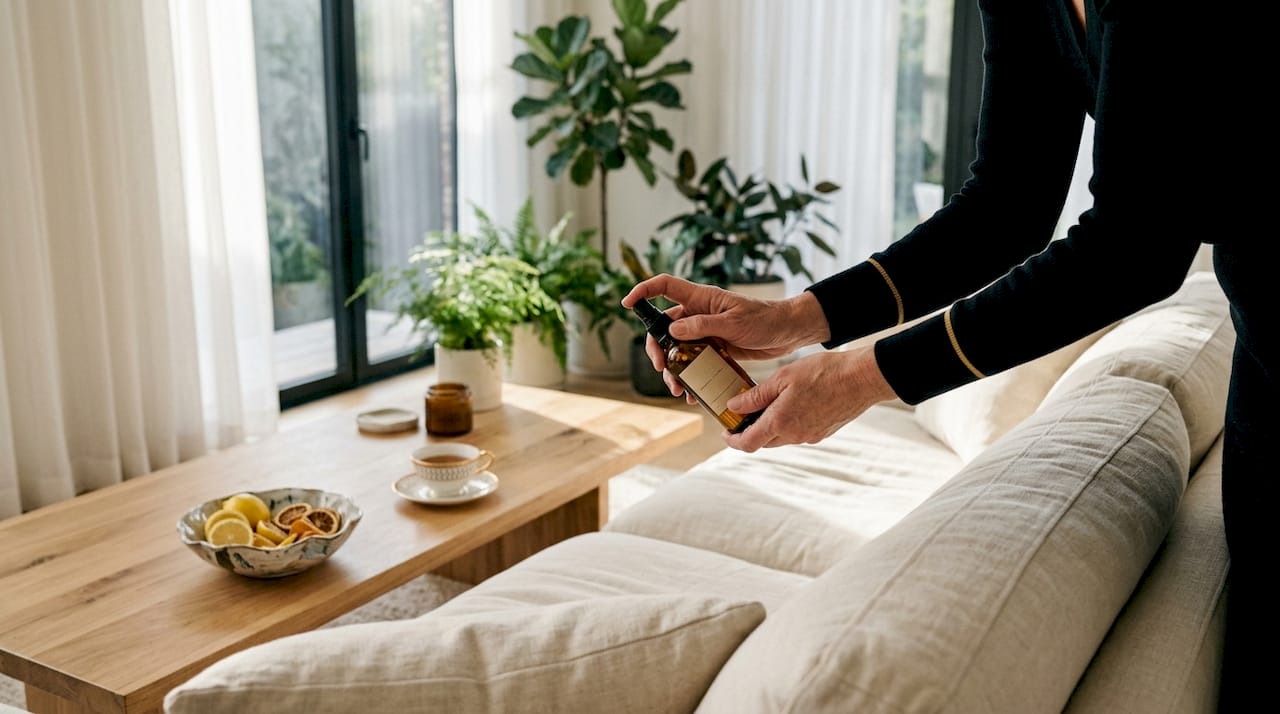
Woody and resinous notes work in the opposite direction. Sandalwood and vetiver are noted for cortisol reduction and support evening stillness. These are the scents to reach for when you want to signal to your nervous system that the day is winding down. Floral and spice notes sit in the middle, offering emotional warmth and balance without the sharp lift of citrus or the deep grounding of wood.
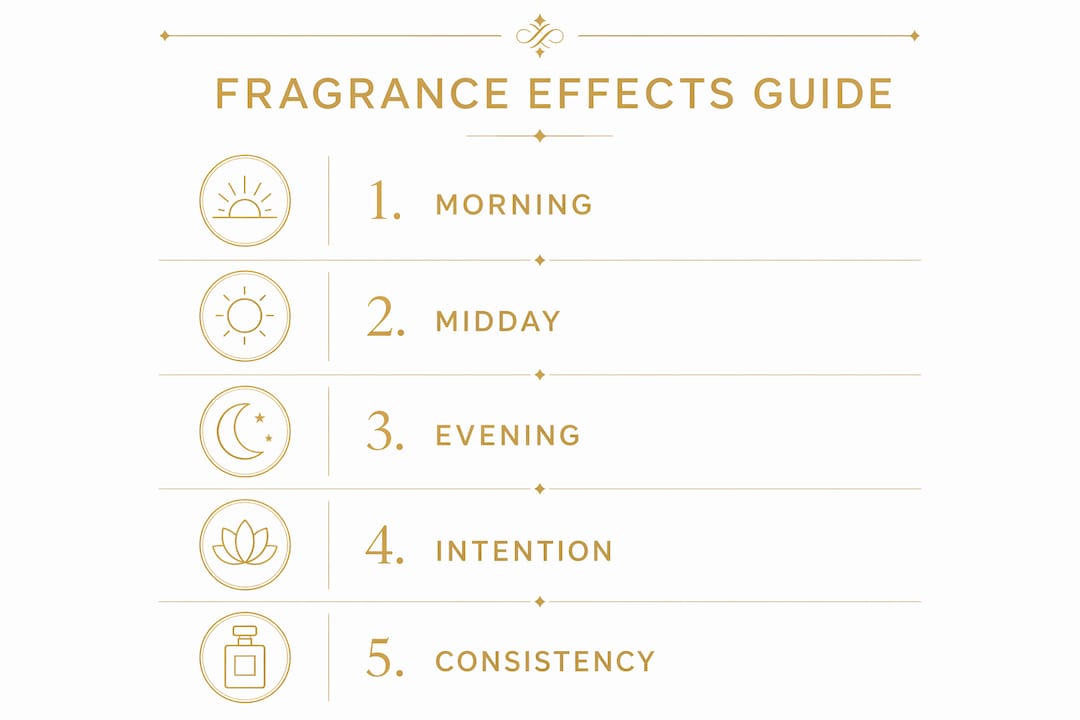
Here is a quick reference for matching scent profiles to ritual goals:
| Scent profile | Best ritual moment | Primary effect |
|---|---|---|
| Citrus (lemon, bergamot) | Morning energizing | Alertness, cortisol modulation |
| Floral (geranium, jasmine) | Midday reset | Emotional balance, warmth |
| Woody (sandalwood, vetiver) | Evening wind-down | Cortisol reduction, calm |
| Spice (cardamom, clove) | Focus or transition | Grounding, mental clarity |
- Jasmine produces dose-dependent effects, meaning a little lifts mood while too much can feel heavy.
- Earthy and herbal notes like vetiver work well layered under a room diffuser in the evening.
- Aquatic and lemongrass profiles suit midday use when you need a clean, neutral reset.
Pro Tip: Match your scent to your intention before you match it to your preference. A fragrance you love at the wrong time of day can still work against you.
How to build a scent ritual that actually sticks
The most common mistake people make with fragrance rituals is treating them as an accessory rather than a cue. A cue is something your brain learns to respond to automatically. That is the goal.
- Choose one scent for one purpose. Pick a single fragrance for your morning routine and use it every morning. The brain builds neural associations through repetition. A scent used consistently for a specific activity becomes a trigger for the emotional state you want.
- Pair the scent with an existing habit. Apply your fragrance immediately after brushing your teeth, or light your diffuser the moment you sit down to work. Attaching a new sensory cue to an established behavior is the fastest way to make it automatic.
- Keep the application brief. Effective scent rituals can be as short as a few seconds of intentional application paired with a consistent anchor. The brevity is not a limitation. It is what makes the ritual sustainable.
- Resist the urge to rotate. Rotating fragrances often prevents the brain from forming strong neural associations between scent and emotional states. Variety feels appealing, but consistency is what produces results.
- Add layering only after the ritual is established. Once a scent association is strong, you can layer a complementary room fragrance. Do this before the ritual is anchored and you risk diluting the signal.
Pro Tip: Place your fragrance product exactly where the ritual happens. A reed diffuser on your bathroom shelf or your desk means you never have to remember. The scent finds you.
Formats and timing: morning, midday, and evening rituals
The format of your fragrance matters as much as the scent itself. Different delivery methods suit different moments in the day.
Morning: energize and set intention
The morning is when scent has the most leverage. Your cortisol is naturally elevated in the first hour after waking, and a bright, citrus-forward fragrance works with that biology rather than against it. Body care products with fragrance, such as a scented body wash or lotion, provide continuous olfactory micro-doses that extend mood-lifting benefits as you move through your morning. A light room spray or a reed diffuser in your bathroom adds an ambient layer without requiring extra steps.
- Use lemongrass or bergamot-forward scents in body care for a clean, energizing start.
- A reed diffuser in the bathroom or bedroom provides passive, consistent scent without effort.
- Avoid heavy base notes like musk or oud in the morning. They slow the mind rather than sharpen it.
Midday: reset and refocus
Midday is when most people hit a wall. A brief scent pause works as a reset button for the nervous system, providing a recognized transition cue that helps balance a chaotic day. This does not need to be elaborate. Stepping away from your desk, taking three slow breaths near a diffuser, or applying a small amount of a floral or aquatic fragrance to your wrists is enough.
Evening: release and restore
Evening fragrance rituals should invite softness and release tension, creating a sensory sanctuary rather than a performance. Lighting a candle while reading, or running a diffuser with sandalwood or vanilla as you prepare for bed, signals to your brain that the day is done. The goal is not productivity. The goal is permission to rest.
| Time of day | Recommended format | Scent direction |
|---|---|---|
| Morning | Body care, room spray | Citrus, bergamot, lemongrass |
| Midday | Personal fragrance, brief diffuser | Floral, aquatic, light spice |
| Evening | Reed diffuser, candle | Sandalwood, vanilla, vetiver |
Pro Tip: Keep your evening scent separate from your daytime scent. The contrast itself becomes a signal. When you smell the evening fragrance, your body starts to slow down.
Expert insights on making fragrance rituals work harder
The return on a brief scent ritual is disproportionate to the effort involved. A few seconds of intentional application, done consistently, produces stress reduction and mood improvement that accumulates over time. The key word is intentional. Applying fragrance absentmindedly while checking your phone does not produce the same effect as pausing, breathing, and being present with the scent.
- Apply fragrance to pulse points (wrists, neck, inner elbow) for skin-warmed projection that evolves naturally through the day.
- Spraying fragrance on clothing from a distance creates a softer, evolving aura compared to direct skin application, which can alter the scent due to body chemistry.
- Natural fragrances evolve through opening, heart, and base notes over hours, offering an interactive sensory experience that rewards presence.
- Keep room scent subtle when wearing personal fragrance. A strong diffuser combined with a potent personal scent becomes overwhelming and undermines the ritual’s emotional impact.
“Avoid viewing fragrance rituals as performance. Evenings especially benefit from scent practices that invite softness and restfulness rather than productivity. The ritual works best when it asks nothing of you.”
The limbic system responds to scent faster than any other sensory input. That speed is the advantage. You do not need to think your way into a calmer state. The scent does the work, provided you have given it enough repetitions to become a reliable cue.
Key takeaways
Scent anchors emotional states most reliably when the same fragrance is used consistently for the same ritual, matched to the right time of day and delivered in the right format.
| Point | Details |
|---|---|
| Match scent to time of day | Use citrus in the morning, floral at midday, and woody or vanilla notes in the evening. |
| Consistency builds neural anchoring | Rotating fragrances prevents the brain from forming reliable emotional associations. |
| Brief rituals produce real results | Even a few seconds of intentional scent application, done daily, reduces stress over time. |
| Format affects experience | Reed diffusers provide passive, all-day scent; body care extends benefits through skin contact. |
| Subtlety protects the ritual | Layering room and personal scent requires restraint. Too much fragrance overwhelms the signal. |
What I have learned from treating fragrance as a daily practice
Fragrance rituals are one of the most underestimated forms of self-care available. They cost almost nothing in time, require no special skill, and deliver results that compound quietly over weeks. The shift happens when you stop treating scent as decoration and start treating it as a cue.
The rituals that have stayed with me longest are the simplest ones. A single reed diffuser in a consistent spot. The same scent every morning before anything else happens. Those small, repeated moments build something real over time. They create a sense of order and intention that carries through the rest of the day, even when the day does not cooperate.
The mistake I see most often is overcomplication. People buy five fragrances, rotate them daily, and wonder why nothing feels grounding. The brain needs repetition to form an association. Give it one scent, one moment, and one consistent cue. The results follow. Fragrance is not a luxury reserved for special occasions. Used with intention, it is one of the most practical tools you have for managing how you move through each day.
— Steel
Dorianescents: fragrance built for the rituals you keep

Dorianescents designs premium reed diffusers and home fragrance products for people who take their daily environment seriously. Each scent profile, from lemongrass and aquatic blends for morning clarity to vanilla and earthy notes for evening calm, is crafted to support the kind of intentional rituals this article describes. The products are handcrafted, long-lasting, and designed to sit beautifully in any room without demanding attention. If you are ready to build a scent ritual that actually holds, the full Dorianescents collection gives you the right starting point. Explore reed diffuser placement and care guidance to get the most from your diffuser ritual from day one.
FAQ
How does fragrance affect mood and daily routines?
Scent signals reach the amygdala and hippocampus directly, bypassing the rational brain, which allows fragrance to trigger emotional responses almost instantly. Used consistently in a daily routine, the same scent becomes a reliable cue for a specific emotional state.
What scents are best for a morning ritual?
Citrus notes like bergamot, lemon, and lemongrass are the most effective for morning use. Bergamot has a clinically validated cortisol-lowering effect and works with the body’s natural morning cortisol peak to sharpen alertness and lift mood.
How long does it take for a scent ritual to work?
Effective scent rituals produce stress reduction after regular, repeated use. The association between scent and emotional state builds through consistency, so the same fragrance applied to the same moment daily produces stronger results over time.
Can I use a reed diffuser and personal fragrance at the same time?
Yes, but subtlety is critical. A strong room diffuser combined with a potent personal fragrance can become overwhelming and diminish the ritual’s emotional impact. Choose a light room scent and a moderate personal fragrance, or let one take the lead.
Why should I avoid rotating fragrances in my ritual?
Rotating fragrances prevents the brain from forming strong neural associations between a scent and a specific emotional state. Consistency is what turns a pleasant smell into a reliable psychological cue.