
Fragrance zones are designated areas within a venue where a specific scent is deliberately deployed to shape guest mood, guide behavior, and reinforce the space’s purpose. Understanding how fragrance zones work at venues is no longer optional for serious event planners and venue managers. Scent is now treated as a core design layer alongside lighting and acoustics, with olfactive zone design requiring the same level of pre-event planning as floor layout or AV setup. Done well, scent zoning creates distinct emotional chapters across a single venue. Done poorly, it produces confusion, complaints, and guest discomfort.
How fragrance zones work at venues: design and planning
Scent zoning begins with a site audit, not a fragrance selection. Before any diffuser is placed, the venue’s layout, ventilation system, guest flow, and functional zones must be mapped. A registration lobby, a VIP lounge, a dining hall, and a departure corridor each serve different purposes and require different olfactive objectives.
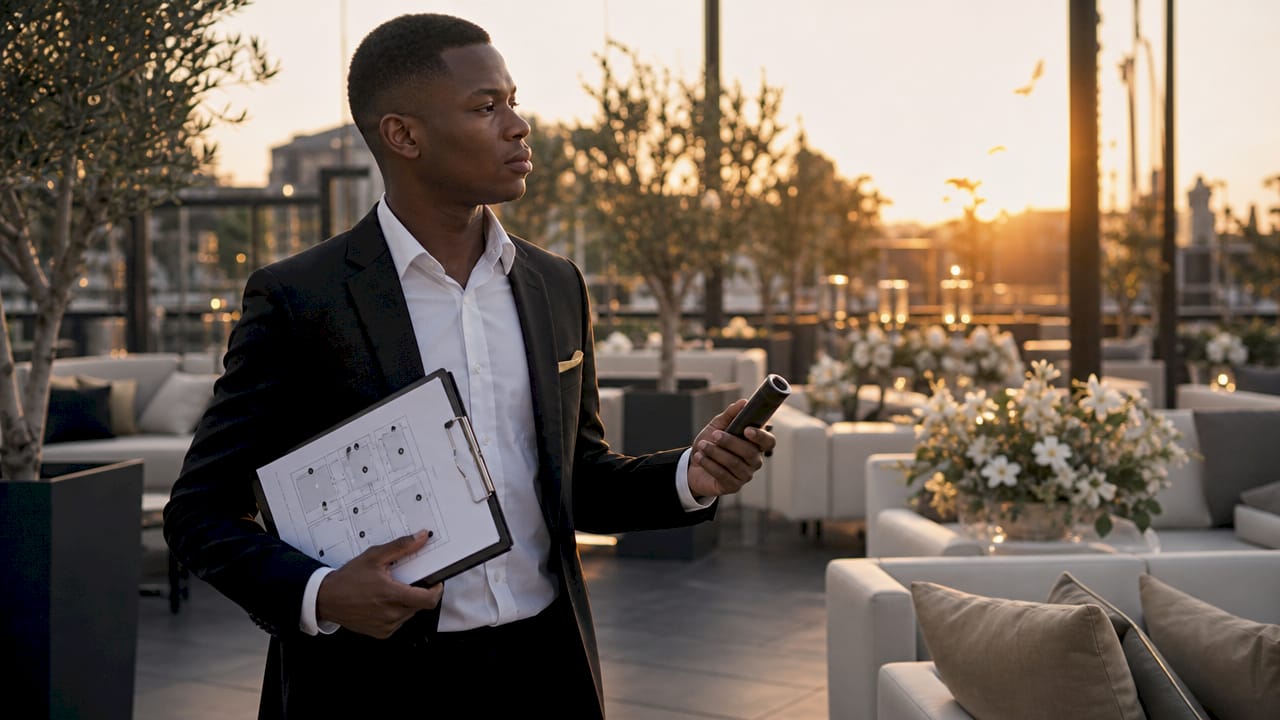
Each zone needs its own olfactive brief aligned with its emotional and functional role along the guest journey. Arrival zones typically use bright, energizing scents like citrus or lemongrass to create a strong first impression. VIP areas call for warmer, more exclusive profiles such as sandalwood or vanilla. Transition corridors benefit from neutral or barely-there scents that allow the brain to reset between experiences.
Scent selection must align with the venue’s overall concept. Scent congruence with the venue’s theme can increase guest spending by up to 20%. Guests perceive whether a scent fits within 20–30 seconds, making misalignment immediately noticeable. A floral scent in a sleek, industrial-style conference venue creates cognitive dissonance that undermines the entire atmosphere.
Delivery method matters as much as scent selection. HVAC-integrated systems work well for large, open zones, while portable diffusers give planners flexibility in smaller or temporary spaces. Intensity must be calibrated to the expected crowd density, since a scent level appropriate for an empty room will feel overwhelming once 300 guests arrive.
- Map every functional zone before selecting any fragrance
- Assign a clear emotional objective to each zone: energizing, calming, exclusive, or neutral
- Match scent profiles to the venue’s visual and thematic identity
- Choose delivery methods based on zone size, ventilation, and flexibility needs
- Plan intensity levels for peak occupancy, not empty-room conditions
Pro Tip: Run a full scent test with the HVAC system active and simulate crowd density using staff or volunteers before the event. An empty room absorbs scent very differently than a full one.
Operational best practices for managing scent zones during events
Planning creates the framework. Operations determine whether it holds. Professional event scenting involves multiple stages starting weeks ahead, including briefing, scent testing, and on-site calibration that accounts for crowd density and ventilation changes throughout the event.
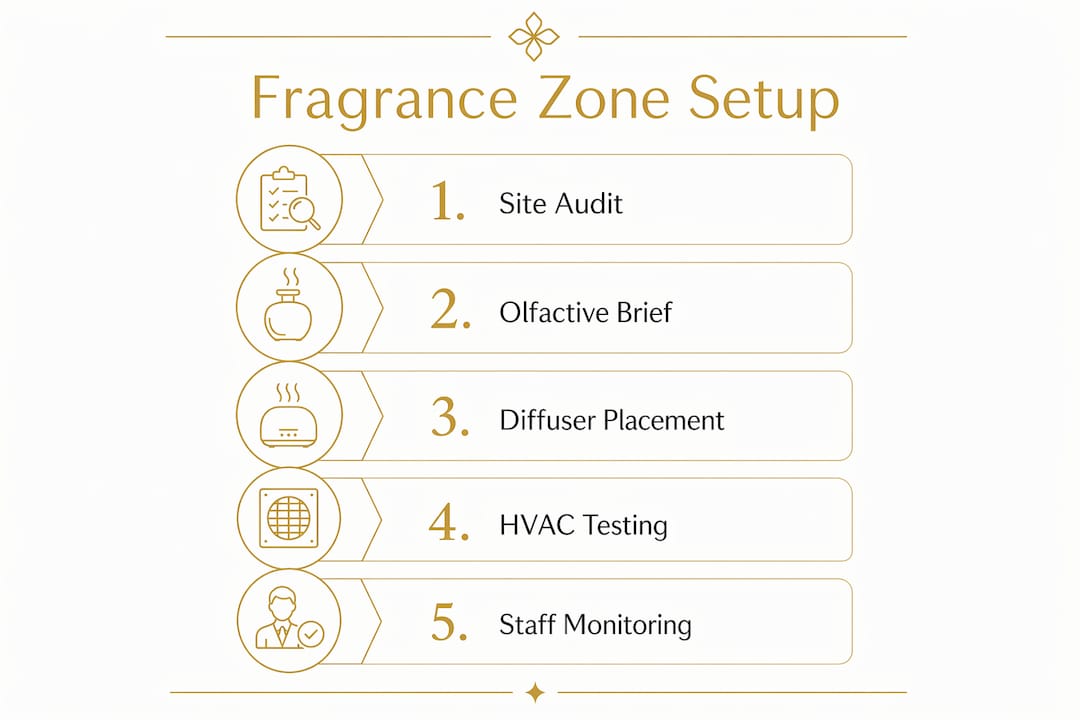
Independent diffusion units per zone are the industry standard for real-time control. Multi-zone controllers on a single device are insufficient for effective scent zoning because they cannot respond independently to localized changes in crowd density or air movement. One zone filling faster than expected requires immediate intensity adjustment without affecting adjacent areas.
Scent bleed between zones is one of the most common operational failures. Technicians walk all zone transitions with the HVAC system active before guests arrive to calibrate olfactive boundaries. These engineered transitions prevent two distinct scents from merging into an unintended third smell at the boundary.
Diffusion method also affects guest tolerance. Pulsing diffusion rather than continuous output reduces olfactory fatigue and irritation, particularly in high-occupancy venues. Timed, low-output cycles allow the scent to refresh without overwhelming guests who spend extended time in one area.
- Assign one independent diffusion unit per zone for real-time intensity control
- Walk all zone transitions with HVAC active before doors open
- Use pulsing diffusion cycles rather than continuous output
- Station trained staff in each zone to monitor intensity and respond to guest feedback
- Log intensity adjustments throughout the event for post-event review
Pro Tip: Designate one staff member as the scent monitor for large events. Their sole responsibility is to walk zones every 30 minutes, check intensity, and escalate any guest complaints immediately.
Inclusive scent zoning: accommodating sensitivities at your venue
Scent inclusivity is a 2026 operational requirement, not a courtesy. Fragrance-free zones are now standard practice for venues that want to accommodate guests with allergies, asthma, or sensory sensitivities. These zones must be clearly marked during the booking process and with physical signage on-site.
Low-impact fragrances such as lavender and soft citrus are appropriate for calm or transition zones where guests with mild sensitivities may still be present. These scents carry lower allergenic risk than heavy florals, musks, or synthetic compounds. Avoiding culturally insensitive scents is equally important, particularly at international events where fragrance associations vary significantly across backgrounds.
Formal scent policies with ingredient transparency build trust and reduce complaints. A public-facing policy that lists fragrance ingredients, identifies scented zones on the venue map, and explains the opt-out process gives guests the information they need before they arrive. This reduces on-the-day friction and demonstrates professional care.
Staff training ties the policy to practice. A written policy means nothing if the team member at the registration desk cannot explain which areas are fragrance-free or how to relocate a guest with a sensitivity. Training should include how to identify distress signals, how to respond without drawing attention to the guest, and who to escalate to if the situation requires a diffuser to be turned off.
- Mark fragrance-free zones in pre-event communications and on-site signage
- Use low-allergenic scents like lavender or soft citrus in mixed-sensitivity areas
- Publish a scent policy listing ingredients and opt-out options before the event
- Train all guest-facing staff on sensitivity protocols and escalation steps
- Avoid heavy musks, synthetic compounds, and culturally specific fragrances at diverse events
Understanding fragrance brand identity helps planners choose scents that are both on-brand and inclusive, since the two goals are not mutually exclusive.
Measuring the effects and benefits of fragrance zone implementation
The benefits of fragrance zoning are measurable, not just atmospheric. Scent congruence with the venue’s concept directly affects guest perception, dwell time, and spending. When the scent matches the space, guests feel more comfortable and stay longer. When it conflicts, they leave sooner and rate the experience lower.
Eliminating negative odors is the first step before any atmospheric scent is added. Negative odors from kitchens, restrooms, or furnishings overpower signature scents and create guest dissonance. A signature fragrance layered over a stale or chemical smell does not neutralize the problem. It compounds it. Odor remediation must precede fragrance deployment in every zone.
Multisensory event strategies that integrate scent with lighting, sound, and visual design produce stronger brand recall than single-sense approaches. Guests who experience a venue through multiple aligned sensory channels are more likely to associate positive emotions with the brand and return. Scent is particularly powerful because the olfactory system connects directly to the brain’s memory and emotion centers.
Feedback loops are what separate a one-time scent experiment from a refined scent program. Post-event surveys that include specific questions about comfort, atmosphere, and sensory experience give planners the data to adjust intensity, zone placement, and scent selection for future events. The scent care guide from Dorianescents offers practical guidance on maintaining scent consistency across repeated events.
| Benefit | What it means in practice |
|---|---|
| Increased dwell time | Guests stay longer in well-scented zones, increasing engagement and spend |
| Stronger brand recall | Scent tied to a brand experience improves memory retention after the event |
| Reduced complaints | Inclusive policies and fragrance-free zones lower sensitivity-related incidents |
| Higher perceived quality | Scent congruence signals attention to detail and raises overall venue rating |
| Repeatable results | Post-event feedback loops allow planners to refine the scent program over time |
Key takeaways
Fragrance zones work at venues by assigning distinct scents to specific areas, each calibrated to the zone’s function, ventilation, crowd density, and guest journey stage.
| Point | Details |
|---|---|
| Start with a site audit | Map ventilation, guest flow, and zone function before selecting any fragrance. |
| Use independent diffusion units | One unit per zone allows real-time intensity control without affecting adjacent areas. |
| Eliminate odors before adding scent | Negative odors from kitchens or furnishings will overpower any signature fragrance. |
| Build in fragrance-free zones | Mark scent-free areas during booking and on-site to accommodate guest sensitivities. |
| Close the feedback loop | Post-event surveys on scent comfort give planners data to refine future programs. |
Scent zoning is a design decision, not an afterthought
The most common mistake I see event planners make is treating scent as the last item on the setup checklist. A diffuser placed near the entrance 20 minutes before doors open is not a scent strategy. It is a guess. And guests notice the difference between a venue that smells intentional and one that smells accidental.
What I have found over years of working with venue environments is that scent fails most often when it is added to a space rather than designed into it. The planners who get it right treat fragrance the way they treat lighting: with a brief, a budget, and a calibration process. They walk the space. They test transitions. They brief their staff.
The other shift I would encourage is moving away from the idea that scent is purely atmospheric. Scent is an operational tool. It affects how long guests stay, how they rate the experience, and whether they associate positive emotions with the brand. That makes it a business decision, not just a sensory one.
The venues leading this space in 2026 are the ones that have written scent policies, trained staff, and built feedback loops into their post-event reviews. They treat scent the way they treat any other guest-facing system: with accountability and iteration. That is the standard worth aiming for.
— Steel
Dorianescents and venue fragrance zoning
Event planners and venue managers who want to move from guesswork to a deliberate scent strategy will find Dorianescents a practical starting point. The brand’s premium fragrance collections include profiles suited to arrival zones, calm spaces, and VIP areas, with scent characters ranging from lemongrass and aquatic blends to warm vanilla and earthy compositions.
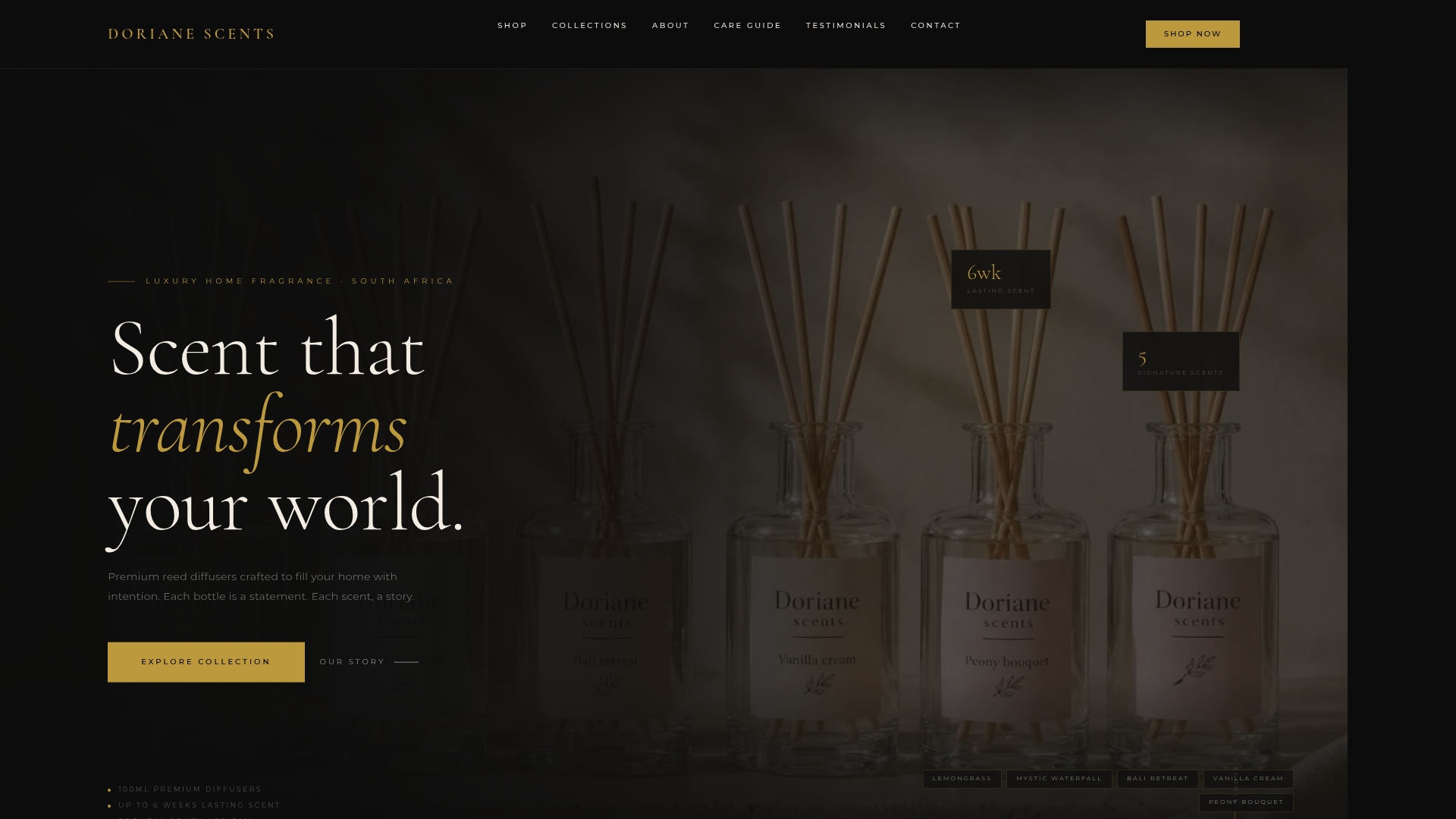
Dorianescents also offers corporate gifting and consultation options for venues that want to align their scent selection with their brand identity. Whether you are designing a single-event scent plan or building a repeatable program across multiple venue spaces, the Dorianescents product range gives you a curated starting point grounded in quality and intentional design. Reach out directly to discuss a scent program tailored to your venue’s layout and guest experience goals.
FAQ
What are fragrance zones in a venue?
Fragrance zones are designated areas within a venue where a specific scent is deployed to shape guest mood and reinforce the space’s function. Each zone has its own scent profile, intensity level, and diffusion method aligned with its role in the guest journey.
How do you prevent scent bleed between zones?
Technicians walk all zone transitions with the HVAC system active before guests arrive to engineer clear olfactive boundaries. Independent diffusion units per zone allow real-time adjustments that prevent two scents from merging at the boundary.
What scents work best for inclusive or mixed-sensitivity venues?
Low-allergenic options like lavender and soft citrus are the safest choices for areas where guests with sensitivities may be present. Heavy musks, synthetic compounds, and culturally specific fragrances carry higher risk and should be avoided at diverse events.
How does scent affect guest spending at venues?
Scent congruence with the venue’s concept can increase guest spending by up to 20%, with guests perceiving alignment within 20–30 seconds of entering a space. Misaligned scents produce the opposite effect, reducing comfort and shortening dwell time.
When should scent planning begin for an event?
Professional scent planning starts weeks before the event, covering briefing, scent testing in empty rooms, and on-site calibration that accounts for crowd density and ventilation. Last-minute scent placement without testing produces inconsistent and often counterproductive results.