
Luxury reed diffusers are defined by four core qualities: premium reed material, complex fragrance formulation, design-forward vessels, and consistent scent longevity. Unlike budget options, which rely on cheap wood reeds that clog within weeks, luxury versions use engineered high-porosity fibre reeds or premium rattan that deliver linear fragrance release over 8–12 weeks. The types of luxury reed diffusers you choose, whether categorized by reed material, scent profile, or vessel design, directly shape the atmosphere and aesthetic of your home. Understanding these distinctions helps you invest wisely and get the most from every drop of fragrance oil.
1. Types of luxury reed diffusers by reed material
The reed itself is the engine of any diffuser. The material determines how fast oil travels upward, how evenly scent disperses, and how long the diffuser performs before needing attention.
Premium rattan reeds are the traditional choice in luxury diffusers. Rattan is a natural material with a consistent internal channel structure that draws fragrance oil upward at a controlled rate. This prevents the sudden scent spikes you get from cheaper wood reeds, which absorb oil unevenly and often saturate too quickly.
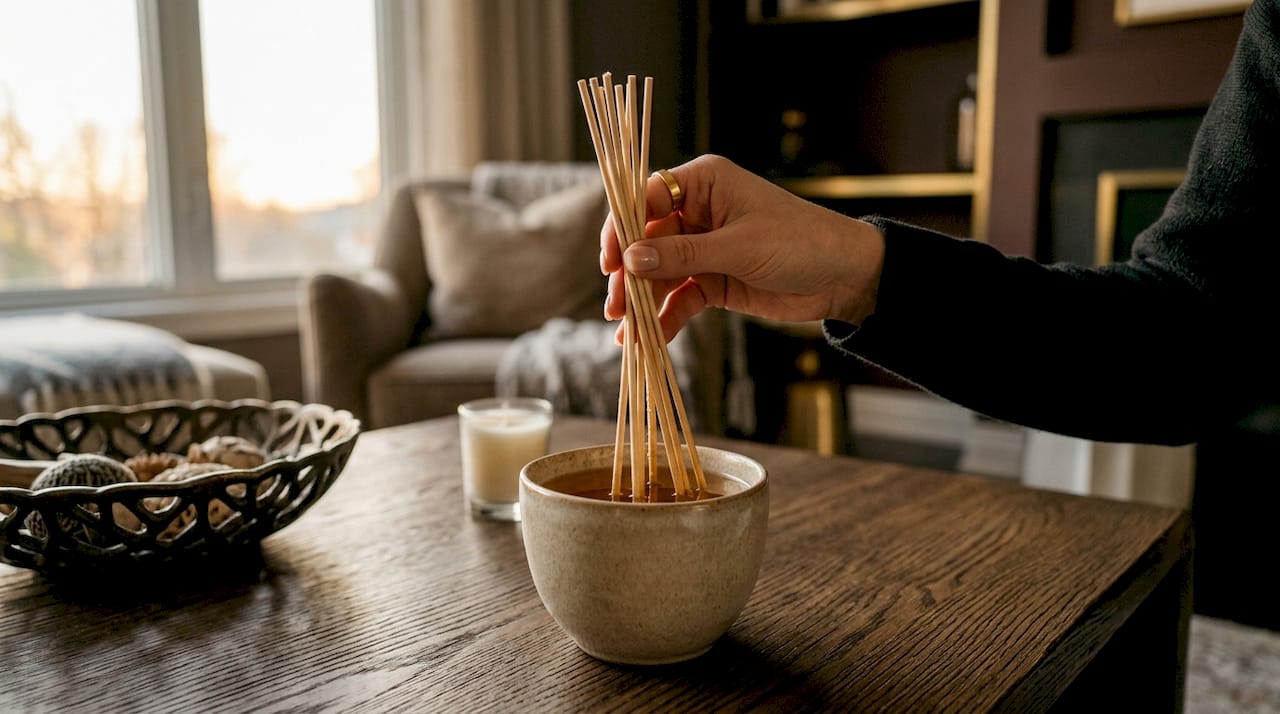
Engineered high-porosity fibre reeds represent the next generation. These synthetic reeds are manufactured with uniform pore sizes, which means oil travels at a predictable, steady pace. Premium fibre reeds pull oil consistently without clogging, unlike cheap wood reeds that block up within 3–4 weeks. The result is a more even scent throw across the full lifespan of the diffuser.
Aesthetically, both reed types differ too. Rattan reeds have a warm, natural look that suits botanical and earthy interior themes. Fibre reeds often come in black or white and suit modern, minimal décor.
- Natural rattan reeds: warm appearance, controlled oil draw, best for organic and botanical interiors
- Engineered fibre reeds: uniform porosity, clog-resistant, suited to contemporary high-end décor
- Bamboo reeds: lightweight and eco-conscious, used in sustainable luxury lines
- Coloured decorative reeds: dyed rattan or fibre reeds that double as visual accents in the vessel
Pro Tip: Place reeds in the vessel and let them soak for 24 hours before flipping. This initial saturation period primes the reeds and prevents dry spots that reduce scent throw.
2. Fragrance profiles and their ideal room applications
Fragrance formulation separates a luxury diffuser from a basic one. Luxury diffusers use layered scent profiles with top, middle, and base notes, much like fine perfume. The top note is what you smell first. The middle note forms the heart of the fragrance. The base note is what lingers longest and anchors the scent in a room.
High-concentration essential oils are combined with advanced carrier solvents, such as dipropylene glycol or natural alcohol bases, that regulate evaporation rate for consistent scent release over many weeks. This is why luxury diffusers smell balanced and smooth, while budget versions often hit you with a sharp chemical note upfront.
Matching the fragrance family to the room function makes a real difference in how a space feels.
- Woody and oriental scents (oud, sandalwood, cedar, vetiver): best for living rooms and studies. These deep, grounding notes suit larger spaces of 12–18 square meters and create a sense of warmth and sophistication.
- Soft florals (jasmine, neroli, rose, lavender): ideal for bedrooms. These notes are calming and not overpowering, which supports rest and relaxation.
- Fresh and herbal scents (lemongrass, eucalyptus, mint, green tea): suited to bathrooms and kitchens. These lighter profiles feel clean and do not compete with cooking or personal care aromas.
- Aquatic and citrus blends: work well in entrance halls and home offices where you want an uplifting, welcoming first impression.
- Vanilla and warm spice blends: suited to reading rooms, dining areas, and spaces designed for comfort and intimacy.
Dorianescents builds its scent collections around these exact fragrance families, including vanilla, lemongrass, aquatic, floral, and earthy blends, each matched to specific home environments.
3. Vessel design and materials in luxury diffusers
The vessel is not just a container. In a luxury diffuser, it is a permanent piece of décor. Design-forward heavy glass vessels act as aesthetic statements that budget single-use styled diffusers cannot replicate. The vessel material also affects fragrance preservation and safety.
Weighted borosilicate glass is the most common premium vessel material. It resists thermal shock, meaning it will not crack near a warm window or radiator. Its weight prevents accidental tipping, which matters when the vessel contains fragrance oil that can stain surfaces.
UV-protective violet glass goes a step further. This glass filters out damaging light frequencies that degrade fragrance compounds over time. A diffuser placed near a window retains its scent quality for longer when housed in violet glass.
- Borosilicate glass vessels: heat-resistant, heavy, clear or frosted finishes
- Violet glass vessels: UV-protective, preserves fragrance purity, distinctive dark appearance
- Ceramic vessels: opaque, sculptural, suited to maximalist and artisan interior themes
- Refillable vessels: designed for long-term use with replacement fragrance inserts, reducing waste
Refillable vessel designs are increasingly popular in the luxury segment. You invest once in a beautiful vessel and replace only the fragrance oil. This reduces packaging waste and lowers the cost per use over time. The reed diffuser vs candle comparison often comes down to this: diffusers offer continuous, flame-free scenting with a vessel that stays on display permanently.
4. Scent longevity and maintenance
Premium reed diffusers typically last 8–12 weeks, while ultra-premium formulations can extend beyond that. Budget models last only 4–8 weeks and often lose scent consistency well before the oil runs out. The difference comes down to oil concentration, carrier solvent quality, and reed porosity working together.
Maintenance is simple but makes a measurable difference in performance.
- Soak reeds for 24 hours before the first flip to prime them fully.
- Flip reeds every 1–2 weeks to refresh scent throw without adding more oil.
- Place the diffuser at waist height in a spot with gentle natural airflow, such as a hallway or near a doorway.
- Keep the diffuser away from direct sunlight and heat sources. Heat accelerates evaporation and shortens the diffuser’s life.
- Adjust reed count to control intensity. Start with fewer reeds and add more if the scent feels too subtle.
The number of reeds directly controls scent intensity: 2–3 reeds suit small bathrooms, 4–6 work well in bedrooms, and 8 or more are appropriate for larger living areas. This is one of the most underused tools for customizing your fragrance experience.
Pro Tip: When a diffuser seems to lose its scent, flip the reeds before assuming the oil is depleted. Reeds saturate and slow their release over time. A flip often restores full scent throw immediately.
The value case for luxury over budget is straightforward. A premium diffuser lasting 12 weeks at a higher price point costs less per week of consistent scenting than a budget version replaced every 4–6 weeks.
5. Choosing the right diffuser type by room
Selecting the right diffuser for each room comes down to three factors: room size, desired mood, and how much foot traffic the space receives. Passive high-end scent diffusion is preferred for steady ambiance over the intense short-term spikes produced by candles or electric diffusers. This makes reed diffusers particularly well suited to rooms where you want a consistent, background scent rather than a dramatic hit.
- Bedroom: Use 4–6 reeds with a soft floral or lavender blend. Keep the diffuser on a dresser or side table away from the bed to avoid the scent becoming too concentrated near your pillow. Top reed diffusers for bedroom ambiance prioritize calm over intensity.
- Living room: Use 8 or more reeds with a woody or oriental scent. Place the diffuser near a natural airflow point, such as between a window and a seating area, so the scent circulates without pooling in one corner.
- Bathroom: Use 2–3 reeds with a fresh or herbal scent. A small vessel with a clean fragrance profile works well here. Budget diffusers perform adequately in small, confined bathroom spaces, but a luxury option delivers a noticeably more refined scent experience.
- Entrance hall: Use 6–8 reeds with an aquatic or citrus blend. This is the first scent guests encounter, so it sets the tone for the entire home.
- Home office: Use 4–5 reeds with a herbal or light woody scent. Avoid heavy oriental blends that can feel distracting during focused work.
The scent care guide from Dorianescents offers additional placement advice tailored to South African home environments, including guidance on humidity and seasonal scent adjustments.
Key takeaways
Luxury reed diffusers deliver consistent, long-lasting scent through the combination of premium reed materials, high-concentration fragrance oils, and design-quality vessels that serve as permanent home décor.
| Point | Details |
|---|---|
| Reed material determines performance | Premium rattan and engineered fibre reeds prevent clogging and deliver even scent release over 8–12 weeks. |
| Fragrance profiles should match room function | Woody scents suit living rooms, soft florals suit bedrooms, and fresh herbal blends work best in bathrooms. |
| Vessel design is part of the décor | Borosilicate and UV-protective violet glass vessels preserve fragrance quality and function as permanent display pieces. |
| Reed count controls scent intensity | Use 2–3 reeds for small rooms, 4–6 for bedrooms, and 8 or more for larger living areas. |
| Placement and maintenance extend longevity | Waist-height placement, initial 24-hour soaking, and regular flipping maximize scent throw and diffuser lifespan. |
What I have learned from years of living with luxury diffusers
Most people underestimate how much the vessel shape affects the scent experience. A wide-necked vessel releases fragrance faster and suits large, open rooms. A narrow-necked vessel slows evaporation and works better in smaller spaces where you want a subtle, lasting background note. I have seen people buy a beautiful diffuser and place it in entirely the wrong room, then wonder why it underperforms.
The other thing I have noticed is that fragrance strength is not always better. A bedroom diffuser running at full intensity with 8 reeds can feel suffocating by morning. Starting with 4 reeds and adjusting after a week gives you far more control. The best reed diffusers for winter are often the ones you barely notice consciously but feel immediately when you walk into a room.
Passive scent diffusion has shifted from a decorative afterthought to a genuine wellness practice. Consumers are choosing reed diffusers over candles and electric diffusers because the scent is steady, flame-free, and requires almost no daily attention. The luxury segment has responded with vessels and fragrance formulations that justify the investment on both sensory and aesthetic grounds.
— Steel
Dorianescents: curated luxury diffusers for every room
Dorianescents designs and handcrafts premium reed diffusers built around exactly the principles covered here: high-porosity reeds, high-concentration fragrance oils, and vessels that belong on display.
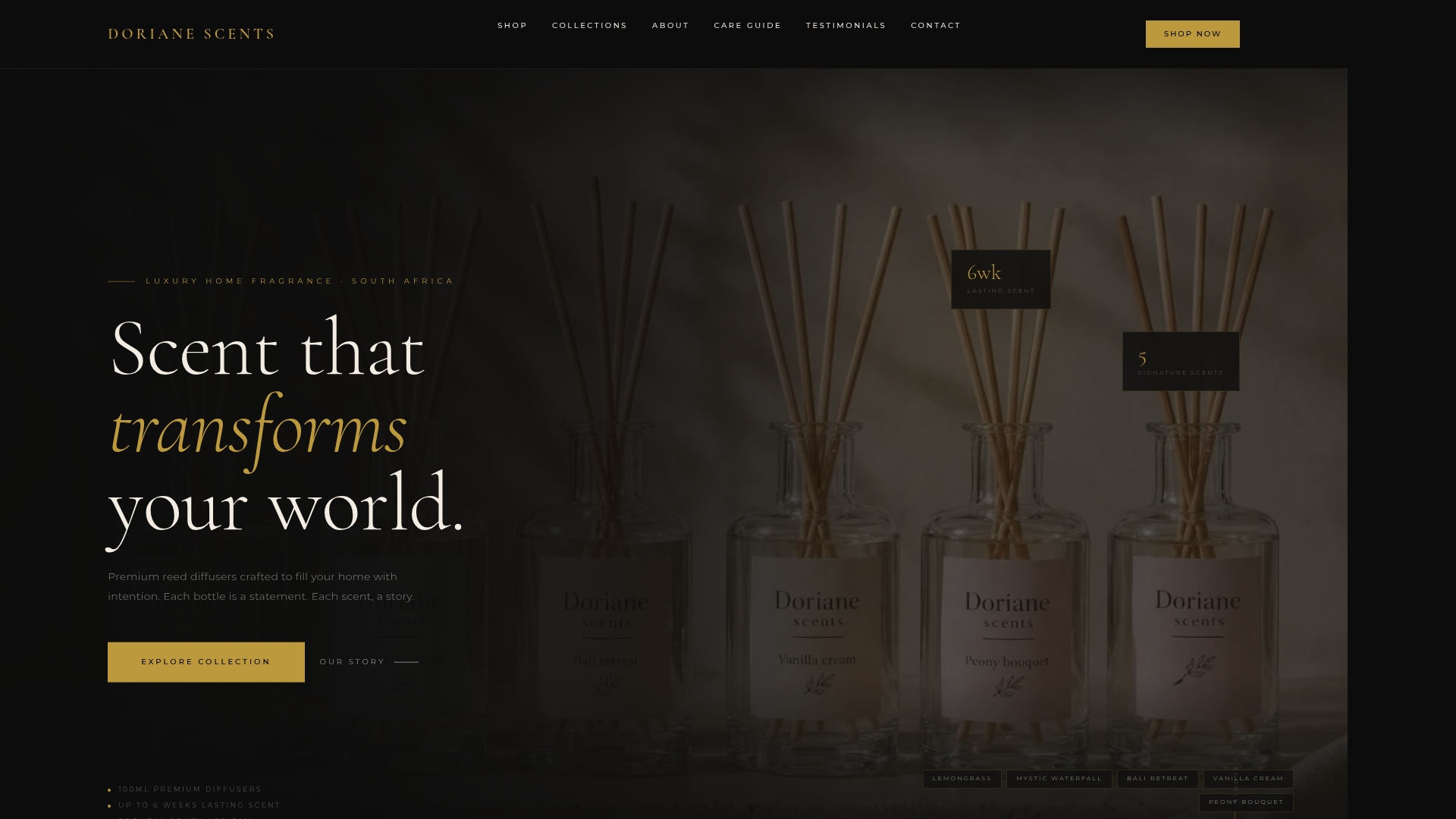
The full collection includes fragrance profiles across vanilla, lemongrass, aquatic, floral, and earthy scent families, with refillable vessel options for long-term use. Gift sets and corporate gifting options are available with premium packaging. Whether you are scenting a bedroom, a living room, or an entrance hall, Dorianescents offers a diffuser matched to the room, the mood, and the aesthetic you are building toward.
FAQ
What makes a reed diffuser “luxury”?
A luxury reed diffuser uses premium rattan or engineered fibre reeds, high-concentration essential oils, and a quality vessel such as borosilicate or UV-protective glass. These materials deliver consistent scent over 8–12 weeks without clogging or harsh chemical throw.
How long do luxury reed diffusers last?
Premium reed diffusers last 8–12 weeks on average, with ultra-premium formulations lasting longer. Budget versions typically last only 4–8 weeks before scent consistency drops off.
How many reeds should I use?
Use 2–3 reeds for small bathrooms, 4–6 for bedrooms, and 8 or more for larger living areas. Adjusting reed count is the most direct way to control scent intensity without changing the oil.
Where is the best place to put a reed diffuser?
Place the diffuser at waist height in a spot with gentle natural airflow, away from direct sunlight and heat sources. Hallways and areas near doorways work well because air movement carries the scent through the space.
Can I refill a luxury reed diffuser vessel?
Yes. Many luxury diffuser vessels are designed for refilling. Refillable designs reduce packaging waste and lower the cost per use over time, making them a practical and sustainable choice for high-end homes.