
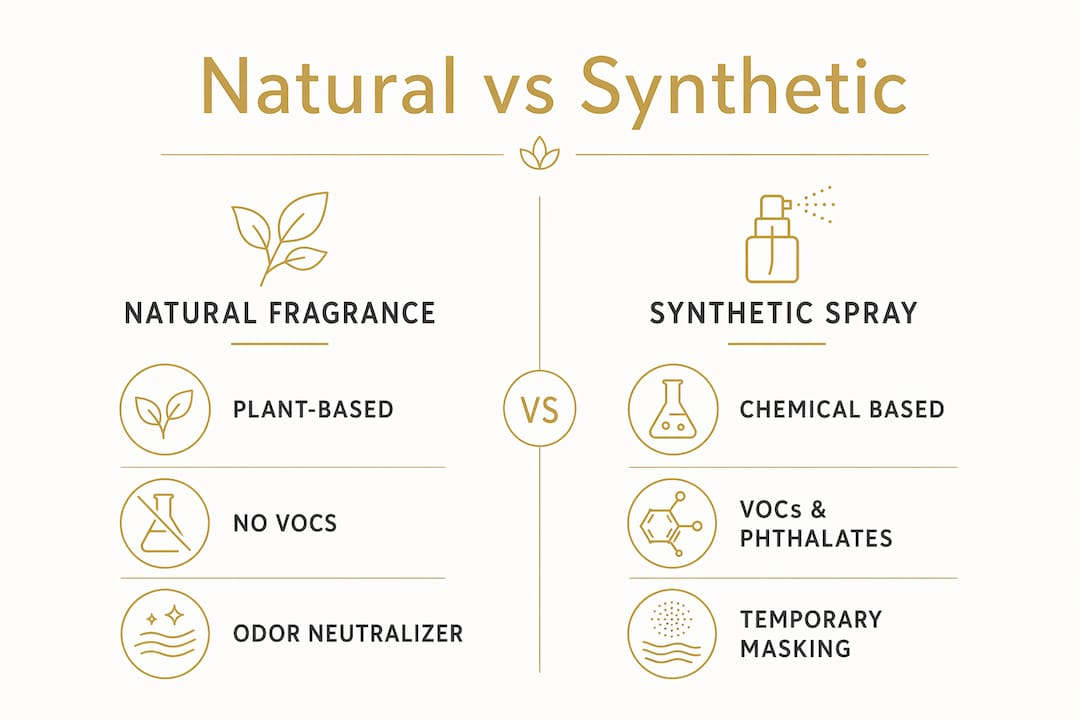
Natural home fragrance is defined as any plant-based scenting method that improves indoor air quality without releasing synthetic chemicals. The case for why home fragrance replaces synthetic sprays is grounded in hard evidence: indoor air is 2–5 times more polluted than outdoor air when synthetic aerosol sprays are in regular use. Synthetic sprays emit volatile organic compounds (VOCs), phthalates, and allergens that degrade the air you breathe every day. Natural alternatives, from reed diffusers to essential oil blends, neutralize odors at the source rather than masking them. The shift is not a trend. It is a health decision backed by science and driven by a growing awareness of what actually goes into a can of “fresh linen” spray.
Why home fragrance replaces synthetic sprays: the chemical case
Synthetic sprays are not air fresheners in any meaningful sense. They are chemical delivery systems that temporarily override your nose’s ability to detect odors. The compounds they release stay in your home long after the scent fades.

What synthetic sprays actually release
Common aerosol air fresheners contain VOCs including formaldehyde, benzene, and toluene. These compounds are linked to respiratory irritation, headaches, and long-term lung damage with repeated exposure. Aerosol sprays increase indoor particulate matter by up to 120% immediately after use. That spike in particles is what you are breathing in the minutes after you spray.
Phthalates are another concern. They are added to synthetic fragrances to make the scent last longer, but they disrupt hormonal function and persist in the environment. Most product labels do not list phthalates individually because they fall under the umbrella term “fragrance.” Synthetic fragrances contain dozens to hundreds of undisclosed chemicals behind that single word on the label.
The allergy and asthma connection
The American Academy of Allergy, Asthma & Immunology places synthetic fragrances among the top 5 triggers for asthma attacks and allergic reactions. That ranking puts synthetic sprays alongside dust mites and pet dander as a genuine household health hazard. For households with children, elderly residents, or anyone with a respiratory condition, this is not a minor inconvenience. It is a daily risk that most people have not connected to the can sitting on their bathroom shelf.
Consumers often equate a “clean” scent with fresh air. That association is a common misconception: true air quality is scent-neutral, and a strong synthetic fragrance frequently signals higher chemical load, not cleaner air.
How do natural home fragrances actually work?
Natural home fragrances use essential oils and plant extracts as their active ingredients. They work through two mechanisms: genuine odor neutralization and, in some cases, active antimicrobial action.
The antimicrobial advantage of essential oils
Essential oils like tea tree, eucalyptus, and lemongrass do more than smell pleasant. Tea tree and eucalyptus oils have documented antimicrobial properties that reduce airborne microbes. This means a diffuser running eucalyptus oil in your living room is not just scenting the air. It is actively working against bacteria and mold spores that synthetic sprays leave untouched.
Lemongrass, one of the signature scent profiles used by Dorianescents, carries similar properties. It freshens a room while contributing to a genuinely cleaner environment rather than a chemically masked one.
Natural scents and psychological wellbeing
The benefits of natural fragrance extend beyond air quality. Natural scents reduce stress and encourage calm, measured breathing in ways that synthetic fragrances cannot replicate. Synthetic sprays overwhelm with a single generic scent designed for mass appeal. Natural scents create emotional memory and a sense of place. That distinction matters for wellbeing, not just aesthetics.
Pro Tip: Start with a single essential oil you already associate with calm, such as lavender or vanilla, before building a layered scent profile for your home. Familiar scents anchor emotional responses faster.
A note on safety
Natural does not mean risk-free. Essential oils can trigger reactions in sensitive individuals and are toxic to pets if used without research. Cats, in particular, cannot metabolize many essential oil compounds. Always check species-specific safety lists before diffusing oils in a home with animals.
What is scentscaping and why does it matter?
Scentscaping is the practice of treating fragrance as an intentional design element, the same way you treat lighting or texture. Design professionals now advocate for natural scent layering tailored to each room’s function rather than spraying one generic scent throughout the entire home.
The logic is straightforward. A kitchen benefits from citrus notes that cut through cooking smells and signal cleanliness. A bedroom calls for lavender or vanilla to signal rest and lower cortisol. A home office responds well to earthy or aquatic notes that support focus without distraction. Each scent choice serves a purpose rather than simply filling space with fragrance.
Scentscaping versus synthetic spray strategies
Synthetic sprays apply one scent everywhere, at full intensity, for a short burst. Scentscaping applies multiple subtle scents, room by room, continuously. The difference in experience is significant. Scentscaping treats fragrance as an “invisible wellness” element, one that shapes mood and behavior without announcing itself. Synthetic sprays, by contrast, announce themselves loudly and then disappear, leaving chemical residue behind.
Natural elements like dried herbs, citrus peels, beeswax candles, and reed diffusers provide this layered effect without any chemical load. They also function as décor, which synthetic spray cans do not. A well-placed reed diffuser from Dorianescents serves as both a scent design element and a visual statement in a room.
Pro Tip: Place a citrus or lemongrass diffuser near your front entrance. First impressions of a home are scent-driven, and a clean, bright note sets a welcoming tone before a guest even enters the main living area.
How to switch from synthetic sprays to natural home fragrance
Switching from synthetic sprays to natural home scenting solutions requires adjusting both your methods and your expectations. Natural fragrance works differently, and that difference is worth understanding before you start.
Practical methods for natural home scenting
-
Reed diffusers provide continuous, low-intensity scenting without heat or electricity. They suit bedrooms, bathrooms, and entryways where you want a consistent background note. Dorianescents’ handcrafted reed diffusers use premium fragrance oils across profiles including vanilla, aquatic, floral, and earthy blends.
-
Simmer pots use water, citrus peels, herbs, and spices simmered on a stovetop to release natural fragrance throughout a kitchen or open-plan living area. A combination of orange peel, cinnamon, and cloves produces a warm, grounding scent with no synthetic chemicals.
-
DIY natural sprays are quick to prepare. Natural sprays can be made in about 2 minutes using distilled water, a small amount of alcohol as a carrier, and 15–20 drops of your chosen essential oil. A lime and peppermint combination works well as a kitchen spray.
-
Beeswax candles burn cleaner than paraffin alternatives and release a faint, natural honey scent. They do not produce the black soot that synthetic-fragrance paraffin candles leave on walls and ceilings.
-
Fresh plants and herbs like rosemary, mint, and eucalyptus placed near windows or in kitchens release gentle natural fragrance as air moves through them. They also improve air quality through photosynthesis.
Managing expectations around scent intensity
Reed diffusers and simmer pots emit subtle, continuous scent rather than the immediate, intense hit of an aerosol spray. This is a feature, not a limitation. Continuous low-level scenting is what creates genuine scent memory and emotional association. The aerosol hit fades within minutes and leaves chemical residue. The reed diffuser works quietly for weeks.
For a comparison of diffuser and candle options suited to different rooms and seasons, the choice often comes down to lifestyle and how much attention you want to give your scenting routine.
Pro Tip: Open windows for 10 minutes before switching on a diffuser. Fresh air resets the baseline, and your natural fragrance will register more clearly in a ventilated room.
Key takeaways
Natural home fragrance replaces synthetic sprays because it neutralizes odors without releasing VOCs, phthalates, or allergens that degrade indoor air quality and trigger respiratory conditions.
| Point | Details |
|---|---|
| Synthetic sprays harm air quality | Aerosol sprays raise indoor particulate matter by up to 120% and release VOCs linked to respiratory damage. |
| Natural scents neutralize, not mask | Essential oils address odor at the source and some, like tea tree and eucalyptus, reduce airborne microbes. |
| Scentscaping improves wellbeing | Matching scent to room function creates mood-specific environments without synthetic chemical load. |
| Switching requires adjusted expectations | Reed diffusers and simmer pots offer subtle, continuous scenting rather than an immediate aerosol hit. |
| Safety research is non-negotiable | Even natural essential oils can trigger allergies and are toxic to pets without proper vetting. |
The case for intentional scenting is stronger than most people realize
I have spent years paying attention to how spaces feel, not just how they look. The single most underestimated element in a well-designed room is scent. Not the aggressive, synthetic kind that announces itself the moment you walk in, but the kind that you notice only when it is absent.
What I have observed is this: synthetic sprays create a Pavlovian association with “clean” that has nothing to do with actual cleanliness. The chemical hit registers as fresh because we have been conditioned to expect it. When you remove synthetic sprays from a home and replace them with natural fragrance methods, the first thing most people notice is not a new scent. It is the absence of a low-grade irritation they had stopped registering.
The wellness and sustainability arguments for natural home fragrance are real, but I think the emotional argument is stronger. Authentic scents, whether vanilla, lemongrass, or an earthy blend, create genuine memory anchors. They make a home feel like a specific place rather than a generic “clean” space. That specificity is what luxury home fragrance is actually selling, and it is something a synthetic aerosol can never deliver.
The trend toward scentscaping is not a passing design moment. It reflects a broader shift in how people think about their homes: as environments they curate with intention, not spaces they maintain with convenience products. Natural fragrance is part of that curation. Synthetic sprays are not.
— Steel
Dorianescents: natural fragrance for a healthier home
Dorianescents was built on the belief that your home should smell as considered as it looks. Every reed diffuser in the Dorianescents range uses premium, carefully selected fragrance profiles, including vanilla, lemongrass, aquatic, floral, and earthy blends, designed to complement specific rooms and moods rather than overwhelm them.

The products are handcrafted, non-toxic, and presented in packaging that functions as décor. For South African homes where air quality, aesthetics, and intentional living matter, Dorianescents offers a natural fragrance alternative that works continuously, quietly, and without the chemical cost of synthetic sprays. Gift sets and corporate gifting options are also available for those who want to share the experience.
FAQ
What makes synthetic sprays harmful to indoor air?
Synthetic aerosol sprays release VOCs including formaldehyde and benzene, and raise indoor particulate matter by up to 120% immediately after use. These compounds are linked to respiratory irritation, asthma triggers, and hormonal disruption from phthalates.
How long does a natural reed diffuser last compared to a spray?
A quality reed diffuser typically lasts several weeks to a few months, depending on the room size and number of reeds used. Synthetic sprays deliver an intense but short burst that fades within minutes.
Are natural essential oils safe for homes with pets?
Not all essential oils are safe around pets. Many compounds in oils like tea tree, eucalyptus, and citrus are toxic to cats and dogs. Always verify species-specific safety before diffusing any oil in a home with animals.
What is scentscaping?
Scentscaping is the practice of using fragrance as an intentional design element, matching specific scents to room functions to shape mood and wellbeing without synthetic chemicals.
Can I make a natural air freshener at home?
A DIY natural spray takes about 2 minutes to prepare using distilled water, a carrier such as witch hazel or alcohol, and 15–20 drops of essential oil. Lime, peppermint, and lavender are practical starting points.