
Fragrance intensity for large spaces is defined as the calibrated level of scent output needed to fill a room without overwhelming the people in it. Getting this balance right is harder than it sounds. High ceilings, open floor plans, HVAC systems, and porous materials all pull fragrance in different directions. A large space scent guide must account for these variables before a single drop of oil is diffused. The standard industry term for this practice is scent marketing or ambient scenting, and the principles apply equally to a South African home with an open-plan living area and a corporate event venue.
1. Fragrance intensity guide for large spaces: start with volume, not vibes
The first number you need is your room’s cubic volume, not its square footage. Ceiling height and airflow directly dilute fragrance, so a room that is 6 meters tall needs significantly more scent output than one at 2.4 meters, even if the floor area is identical. Multiply length by width by height to get your cubic volume, then use that figure to select a diffuser rated for that capacity.
Layout matters just as much as volume. Open-plan spaces with no walls to trap scent lose fragrance faster than rooms with defined zones. Obstructions like furniture clusters, partition screens, and staircases create dead spots where scent never reaches.

Pro Tip: Sketch your room layout and mark the airflow direction from your HVAC vents before placing any diffuser. Position the unit so scent travels with the airflow, not against it.
2. Start low and adjust: the 30–40% rule
Experts recommend starting at 30–40% capacity in large spaces, then running a 24–48 hour monitoring phase before making any changes. This approach prevents the single most common mistake: cranking intensity too high on day one and creating an environment that feels suffocating by day two.
During the monitoring phase, walk through the space at different times of day. Note where the scent feels strong, where it disappears, and how it changes when the room fills with people. Body heat and movement accelerate fragrance diffusion, so a room that smells perfect when empty can feel overpowering at full occupancy.
Increase intensity in increments of 10% and wait at least 12 hours between each adjustment. This gives your nose time to recalibrate and gives you accurate feedback.
3. Match fragrance concentration to the space
Fragrance concentration determines how far a scent projects and how long it lasts. Extrait de parfum at 20–40% concentration lasts 8–12 hours or more, while Eau de Toilette at 5–15% is lighter and shorter-lived. Higher concentration does not always mean stronger projection. It means richer, longer-lasting scent.
For large rooms, Eau de Parfum (15–20% concentration) hits the practical sweet spot. It projects well enough to fill volume without requiring constant reapplication or high diffuser output.
- Extrait de parfum: Best for intimate large spaces like private lounges or master suites. Rich and long-lasting, but can feel heavy in fully open areas.
- Eau de Parfum: The most practical choice for open-plan living rooms, dining areas, and event venues. Strong projection with manageable longevity.
- Eau de Toilette: Works in large spaces only with high diffuser output or frequent reapplication. Better suited to smaller rooms.
- Body sprays and room mists: Designed for immediate effect with short duration. Use these for event spaces where you need a quick scent refresh between sessions.
Pro Tip: For event venues, layer an Eau de Parfum base through your diffuser and use a room mist for a targeted refresh 30 minutes before guests arrive.
4. Choose the right fragrance notes for big rooms
Woody, spicy, and amber notes diffuse well in large spaces without becoming too intense. Light citrus and delicate florals are better suited to smaller rooms because they dissipate quickly and lose their character in high-volume environments.
This is a practical chemistry point, not a matter of taste. Heavy base notes like sandalwood, oud, and vetiver have larger molecular structures that linger in the air longer. Fresh top notes like lemon and bergamot evaporate fast. In a large room, those top notes are gone before they reach the far wall.
Season also shapes your choice. In winter, warm amber and spice notes feel appropriate and project well in heated, enclosed spaces. In summer, when windows open and airflow increases, a slightly heavier concentration of your chosen scent compensates for the faster dispersal.
5. Cold air diffusion: the best technology for large spaces
Cold air diffusion creates a fine, dry mist that stays suspended in the air longer than heat-based or ultrasonic alternatives. This makes it the preferred method for sustained scenting in large commercial and residential settings. The technology does not use water or heat, so it preserves the integrity of the fragrance oil and leaves no residue on surfaces.
HVAC integration takes cold air diffusion further. When a diffuser connects to a building’s air handling system, scent distributes evenly through every vent in the space. This eliminates dead spots and removes the need for multiple standalone units.
Cold air diffusion is the only technology that consistently delivers even scent coverage across spaces larger than 100 square meters without creating hot spots or residue. For anyone serious about ambient scenting in a large home or venue, it is the non-negotiable starting point.
The types of luxury reed diffusers available for residential use offer a passive alternative. Reed diffusers work through natural evaporation and capillary action. They suit large rooms when placed strategically near airflow sources, though they cannot match the output of a powered cold air unit in very large spaces.
6. Program your diffuser with a schedule
Scheduling scent output around occupancy patterns cuts oil consumption and prevents scent fatigue. Run higher intensity during peak hours when the space is full, and reduce output during quiet periods. This is not just a cost-saving measure. It keeps the scent feeling fresh to everyone who enters.
A practical cycle for most large residential and event spaces runs 10 minutes on and 20 minutes off. Regular on/off intervals maintain a consistent background scent without allowing the concentration to build to an uncomfortable level.
- Set peak intensity for the hours when the space is most occupied.
- Drop to 20–30% output during early morning or late evening low-traffic periods.
- Program a complete off cycle overnight to let the space air out naturally.
- Review and adjust the schedule monthly as seasons and occupancy patterns change.
7. Account for porous materials in your space
Porous materials like carpets and draperies absorb fragrance rather than reflecting it back into the air. A room with wall-to-wall carpet and heavy curtains needs higher diffuser output or longer diffusion cycles than a room with hard floors and bare walls.
This is one of the most overlooked variables in choosing scents for open spaces. Homeowners often set their diffuser to a level that works perfectly in summer when windows are open, then find the same setting feels weak in winter when heavy drapes are drawn. The drapes are absorbing a significant portion of the scent output.
Adjust your baseline intensity upward by roughly one setting level when you add seasonal soft furnishings. Reassess every time the room’s material composition changes significantly.
8. Use scent zones in multi-room or open-plan spaces
One diffuser rarely covers an entire open-plan home or event venue evenly. The solution is scent zoning: placing separate diffusers in distinct areas and programming each one independently. This approach, explained in detail in the fragrance zones guide, prevents any single area from becoming oversaturated while ensuring full coverage.
In a home, a kitchen zone might use a lighter citrus-adjacent scent at lower intensity, while the living area runs a deeper amber or woody blend at medium output. The scents should complement each other at the transition points, not clash.
Pro Tip: Test your zone transitions by standing at the midpoint between two diffusers. If you can clearly smell both scents competing, reduce the output of the stronger unit by 10% and reassess after 24 hours.
9. Avoid scent fatigue with stopper cycles
Over-saturating a space causes occupants to become desensitized or find the scent overpowering. Scent fatigue is the point at which the nose stops registering a fragrance entirely, usually because the concentration has been too high for too long. Once fatigue sets in, occupants either stop noticing the scent or start finding it irritating.
Stopper cycles are deliberate breaks in diffusion, typically 20–30 minutes of no output, built into the daily schedule. They reset the olfactory baseline and make the scent feel fresh again when diffusion resumes. The scent care guide from Dorianescents covers incremental adjustment techniques that work alongside stopper cycles for residential spaces.
Collect feedback from people who spend time in the space regularly. Their reactions are more reliable than your own nose, which adapts quickly to a scent you have chosen and live with daily.
10. Adjust intensity for occupancy and external conditions
A space at full capacity smells different from an empty one. Body heat, movement, and breath all affect how fragrance disperses and how quickly it dissipates. Balanced scenting requires adjusting output upward when occupancy rises and pulling it back when the space empties.
External conditions matter too. On humid days, fragrance molecules stay suspended in the air longer, which means your usual intensity setting can feel stronger than normal. On dry, windy days with open windows, the same setting may feel weak. Check weather conditions before events and adjust your diffuser settings accordingly.
The role of fragrance in room design also shifts with occupancy. A scent that anchors a calm, empty space may need to be warmer and more grounding when the room fills with people and noise.
Key takeaways
The most effective fragrance intensity strategy for large spaces starts conservatively, accounts for volume and airflow, and uses scheduled diffusion cycles to prevent scent fatigue.
| Point | Details |
|---|---|
| Start at 30–40% capacity | Begin low and monitor for 24–48 hours before increasing output. |
| Match concentration to space size | Eau de Parfum suits most large rooms; Extrait de parfum works for intimate large areas. |
| Choose heavy base notes | Woody, amber, and spicy notes project better in large volumes than light citrus or florals. |
| Program diffuser schedules | Align intensity with occupancy peaks and use stopper cycles to prevent scent fatigue. |
| Account for materials and airflow | Carpets, drapes, and HVAC systems all change how much output your space actually needs. |
Why most people get large-space scenting wrong from the start
The most common mistake I see is treating a large space like a big version of a small room. People buy a diffuser rated for their square footage, set it to full power, and wonder why the space smells like a department store by day three. The problem is not the product. It is the approach.
Large spaces are not just bigger. They are more complex. Airflow patterns, ceiling height, soft furnishings, and the number of people moving through the space all interact in ways that a simple square-meter rating cannot capture. I have seen beautifully designed open-plan homes where the fragrance pooled near the ceiling and never reached nose height, simply because the diffuser was placed too low and the HVAC was pulling air in the wrong direction.
The other thing I have learned is that scent fatigue is invisible until it is a problem. You stop noticing the fragrance, assume it has run out, and turn the intensity up. Then a guest walks in and immediately finds the smell overpowering. Your nose adapted. Theirs did not. Stopper cycles and regular feedback from other people in the space are the only reliable checks on this.
My honest recommendation: treat your first two weeks with any new diffuser setup as a calibration period. Keep notes. Adjust in small steps. The payoff is a space that smells intentional and welcoming every single time someone walks in, not just on the day you set it up.
— Steel
Dorianescents and the art of scenting large spaces well
Dorianescents designs premium reed diffusers and home fragrance products built for exactly this kind of intentional scenting. The range covers warm vanilla and earthy blends that project well in open-plan spaces, alongside lighter lemongrass and aquatic profiles suited to zoned areas within larger homes.
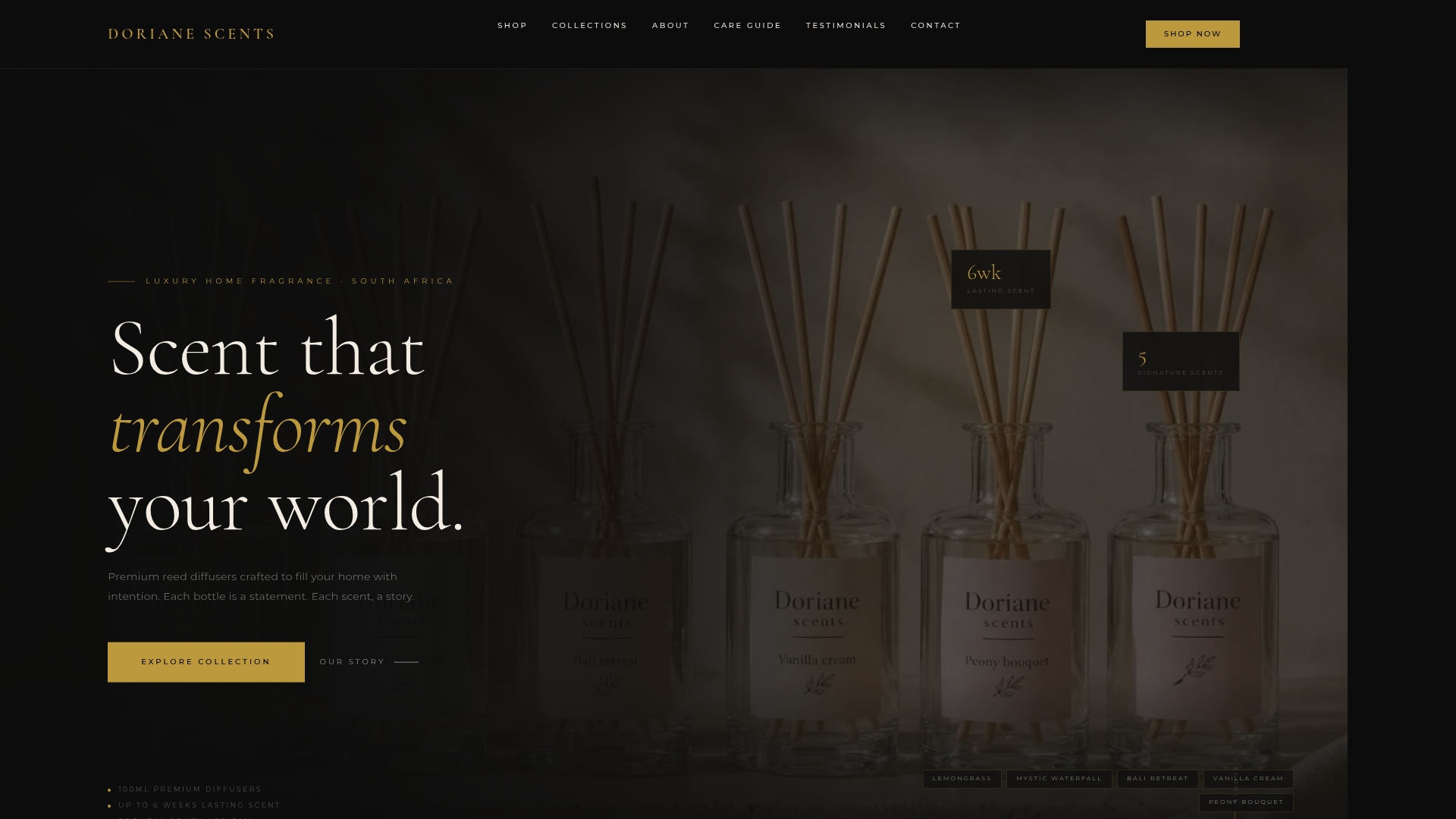
For anyone working through how to scent large rooms on a realistic budget, the affordable luxury scenting guide on the Dorianescents website walks through product selection, placement, and intensity management without requiring a commercial-grade setup. The products are handcrafted, the fragrance profiles are curated for South African homes, and the guidance is practical enough to apply from day one.
FAQ
What is the best starting intensity for a large room?
Start at 30–40% of your diffuser’s maximum output and run a 24–48 hour trial before adjusting. This prevents over-saturation and gives you accurate feedback from the space.
Which fragrance notes work best in large open spaces?
Woody, spicy, and amber notes diffuse better in large volumes than light citrus or delicate florals, which dissipate too quickly to fill a big room effectively.
How do I prevent scent fatigue in a large space?
Program your diffuser with stopper cycles, such as 10 minutes on and 20 minutes off, and collect regular feedback from people who use the space. Your own nose adapts too quickly to be a reliable guide.
How many diffusers do I need for an open-plan home?
One diffuser rarely covers an entire open-plan space evenly. Use scent zoning with separate units in distinct areas, each programmed independently to prevent oversaturation at any single point.
Does ceiling height affect fragrance intensity?
Yes. High ceilings dilute fragrance significantly. Calculate your room’s cubic volume (length x width x height) rather than just floor area when selecting a diffuser and setting its output level.