
Fragrance layering is defined as the deliberate combination of multiple scents and formats to build a personalized, multidimensional aroma that evolves throughout the day. Understanding how fragrance layering works means grasping three core principles: scent weight, note compatibility, and application order. Start with the heaviest base scent, build upward through character notes, and finish with a light accent. Get those three elements right, and your fragrance stops being a single static moment and becomes a living, shifting sensory experience.
What are the essential principles of how fragrance layering works?
Every fragrance is built on a three-tier structure called the scent pyramid. Base notes are the heaviest and longest-lasting, typically woods, musks, vanilla, or amber. Heart notes, also called character notes, define the fragrance’s personality, often florals, spice, or earthy blends. Top notes are the lightest and most volatile, usually citrus or green accords that hit first and fade fastest.
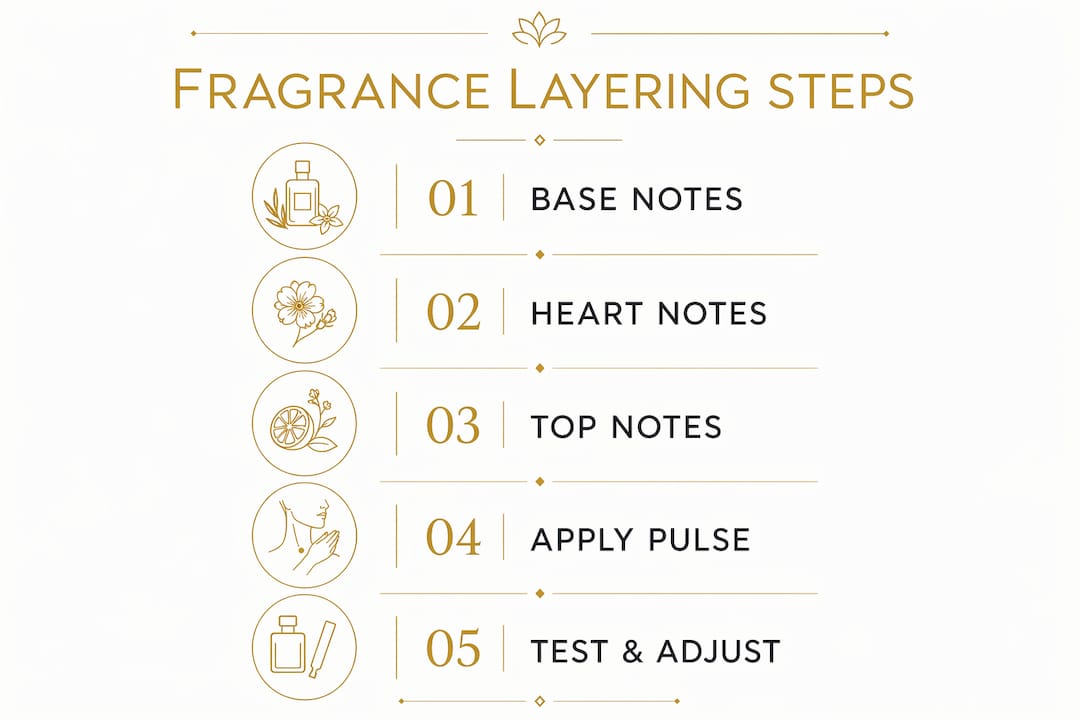
Layering works by stacking these tiers deliberately. You apply the heaviest layer first so it anchors the blend, then add progressively lighter scents on top. This mirrors the natural evaporation sequence of a single perfume, but gives you control over each tier individually.
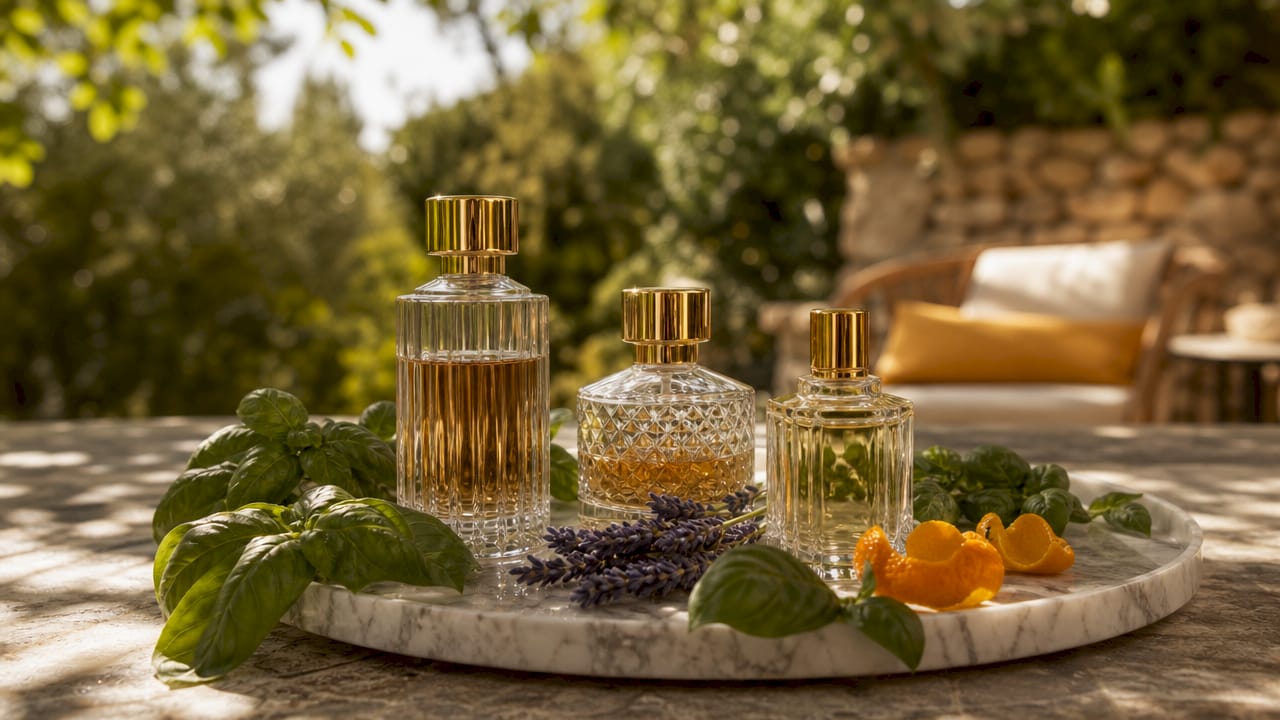
Ratios matter as much as order. Experts advise starting with 2–3 sprays of a heavier scent paired with 3–5 sprays of a lighter one, or using a 1:1 ratio when both scents have similar weight. That balance prevents one note from drowning the other. The goal is harmony, not competition.
Note compatibility is the factor most people underestimate. Scents from the same fragrance family blend naturally. Vanilla and sandalwood share warm, resinous qualities, so they merge without conflict. Lemongrass and aquatic notes share a clean brightness that makes them natural partners. Pairing a heavy oriental base with a sharp green top note, on the other hand, creates friction rather than depth.
- Start heavy, finish light. Apply base notes first, heart notes second, top notes last.
- Match families. Warm with warm, fresh with fresh, earthy with earthy.
- Control your count. Use measured spray counts rather than guessing.
- Wait between layers. Give each layer 60–90 seconds to settle before adding the next.
- Test on skin first. What smells balanced in the bottle may shift once it reacts with your body chemistry.
Pro Tip: If you are new to layering, start with just two scents from the same family before attempting a three-tier blend. Two well-matched notes teach you more about compatibility than three poorly chosen ones ever will.
How do environmental and personal factors affect layering choices?
Heat accelerates evaporation, which changes everything about how a layered blend performs. In warmer climates, heavy woods and spices can become excessive quickly, turning a balanced blend into something overpowering. Lighter citrus or floral top notes suit summer layering far better. In cooler months, richer base notes like amber or musk hold longer and reward a heavier hand.
Skin chemistry is equally decisive. Two people wearing the same layered combination will smell different within an hour. Your skin’s pH, moisture level, and natural oils all interact with fragrance molecules. This is why testing on your own skin, not on paper strips, is the only reliable way to evaluate a layered blend.
Humidity extends scent longevity. Moisturized skin holds fragrance longer because the oils give scent molecules something to cling to. Applying an unscented lotion before layering your fragrances creates a base that slows evaporation and deepens the overall effect.
- Hot weather: reduce base note intensity, increase fresh top notes.
- Cold weather: lean into warm base notes, use fewer top note sprays.
- Dry skin: apply lotion first to extend wear time.
- Sensitive skin: choose naturally derived scents and ensure proper ventilation, especially indoors.
- High humidity: use lighter concentrations, as moisture amplifies projection.
Home fragrance layering responds to environmental factors differently than personal fragrance does. A reed diffuser releases scent continuously at a low, steady rate. A room that is too warm will push that diffusion faster, making the scent more intense than intended. Positioning diffusers away from direct sunlight and heat sources gives you more control over the release rate and, by extension, the layered effect in the room.
How can you layer fragrances at home versus on the body?
The mechanics of layering at home and on the body share the same logic but use completely different tools. On the body, you work with lotions, oils, and sprays applied in sequence to the skin. At home, you work with diffusers, candles, and room sprays applied across a physical space.
Layering on the body
The most effective sequence for personal fragrance layering is lotion, then oil or perfume, then a finishing spray. The lotion creates a moisturized base. The perfume or oil delivers the heart of the blend. The spray adds a top note burst that lifts the whole composition. Each product type releases at a different rate, which means the blend evolves naturally over hours rather than fading all at once.
Pro Tip: Apply fragrance to pulse points: wrists, neck, and the inside of your elbows. These areas generate heat, which pushes the scent outward and helps each layer project without you needing to over-apply.
Layering at home
Home fragrance layering relies on controlling release rates across formats. A reed diffuser provides a continuous base note presence throughout the day. A candle adds warmth and temporal depth when lit. A room spray acts as an immediate burst that resets or refreshes the scent when needed. Using all three in the same space creates a polished, evolving scent environment that no single product can replicate alone.
The 1-1-1 rule structures this approach cleanly. One base scent anchors the room. One character scent defines its personality. One fresh accent keeps the blend from feeling heavy or static. This prevents sensory overload and allows the fragrance to develop naturally as conditions in the room change throughout the day.
Scent zoning takes this further. Layering creates olfactory zones in open spaces, distinguishing activity areas without any physical division. A grounding earthy or vanilla scent in the living area signals rest. A citrus or lemongrass note near a workspace signals focus. An aquatic or floral blend in a bathroom signals freshness. You can read more about this approach in the Dorianescents guide on fragrance zones at venues.
| Format | Role in the layer | Best placement |
|---|---|---|
| Reed diffuser | Continuous base note | Central living areas, bedrooms |
| Candle | Warmth and character note | Dining areas, reading corners |
| Room spray | Fresh accent, instant reset | Bathrooms, entryways |
| Scented lotion | Skin base for personal layering | Applied before perfume |
| Perfume or oil | Heart note on the body | Pulse points |
Fragrance also functions as a foundational design element in a room, working alongside lighting and color to shape how a space feels. Choosing scents that support the behavior you want in each room, grounding notes for relaxation, energizing citrus for productivity, makes layering a practical tool rather than a decorative afterthought.
What are common mistakes and how do you avoid them?
The most common layering mistake is adding too many scents at once. Three layers is the practical ceiling for most people. Beyond that, the nose loses the ability to distinguish individual notes, and the blend collapses into a single undifferentiated smell.
Poor note matching is the second most frequent error. Beginners often layer by volume rather than by note compatibility, applying more of what they like rather than what works together. The result is competition rather than harmony. The fix is to learn your scent families and stick to pairings within or adjacent to them.
Applying all layers to the same single spot, whether on skin or in a room, is another common error. Effective layering uses spatial distribution, spreading anchor, character, and accent notes across different points rather than stacking them in one place. This lets each note bloom independently before they meet in the air.
- Do not rush. Let each layer settle before adding the next.
- Do not over-apply. More product does not mean more complexity. It means more noise.
- Do not skip skin testing. A blend that works on paper may not work on your skin.
- Do not ignore ventilation. Mindful fragrance use includes proper airflow, especially for those with sensitivities.
- Do refresh strategically. A room spray or a single spray of your top note can revive a faded blend without rebuilding from scratch.
Pro Tip: When combining synthetic and natural scents, apply the natural scent first. Natural ingredients tend to be softer and shorter-lived. The synthetic layer on top extends the blend’s life and adds projection without overpowering the natural base.
Patience is the underrated skill in fragrance layering. A blend that smells off in the first five minutes often resolves beautifully after 15–20 minutes of settling. Resist the urge to add more before the existing layers have had time to interact.
Key takeaways
Fragrance layering works by stacking base, character, and accent notes in measured ratios, using compatible scent families, and distributing layers across skin or space rather than concentrating them in one spot.
| Point | Details |
|---|---|
| Follow the scent pyramid | Apply base notes first, heart notes second, and light top notes last for natural evolution. |
| Use the 1-1-1 rule at home | Anchor with a base scent, define with a character scent, and refresh with a light accent. |
| Match scent families | Pair warm with warm and fresh with fresh to avoid note conflict and sensory overload. |
| Adjust for environment | Reduce heavy base notes in heat and increase them in cooler, drier conditions. |
| Distribute spatially | Spread layers across different points in a room or on the body rather than stacking them in one place. |
Why layering changed how I think about scent entirely
I used to treat fragrance the way most people do: one product, one moment, done. The idea that scent could be designed, layered, and adjusted the way you adjust lighting in a room did not occur to me until I started paying attention to how different spaces made me feel and tracing that feeling back to what I was smelling.
What surprised me most was how little volume matters compared to structure. The most compelling layered blends I have encountered were not the loudest ones. They were the ones where each note had room to breathe. A vanilla base sitting quietly under a lemongrass character note, finished with a single spray of something aquatic, creates a depth that no single perfume can replicate. The restraint is the point.
The other thing I have come to believe is that layering is not a technique reserved for perfumers or enthusiasts. It is a practical skill with immediate, tangible results. Once you understand that fragrance supports daily life the same way good lighting or a well-chosen color palette does, you stop thinking of it as optional. A bedroom that smells like warm sandalwood and vanilla feels different from one that smells like nothing. That difference is real, and it is worth designing intentionally.
The creative freedom in layering is also genuinely enjoyable. There is no single correct answer. Your combination of notes, formats, and spaces is yours alone. That is the part no single-product fragrance can offer you.
— Steel
Curated layering starts with the right ingredients
Building a layered scent experience at home requires products that are formulated to work together, not just smell good individually. Dorianescents designs its reed diffusers, scent blends, and home fragrance collections with layering in mind, offering base-note anchors in earthy and vanilla profiles, character-note options in floral and lemongrass, and fresh aquatic accents that complete the 1-1-1 structure cleanly.

The full Dorianescents collection gives you the building blocks to create a signature scent environment at home without guesswork or compromise. For those working within a budget, the affordable luxury scenting guide walks through how to combine products at different price points without sacrificing quality or depth. Premium formulation, South African craftsmanship, and a clear layering framework are all in one place.
FAQ
What is fragrance layering?
Fragrance layering is the practice of combining multiple scents or fragrance formats in a deliberate sequence to create a personalized, evolving aroma. It works by stacking base, heart, and top notes in compatible ratios.
How many scents can you layer at once?
Three layers is the practical limit for most people. Beyond three, the nose struggles to distinguish individual notes and the blend loses definition.
What is the 1-1-1 rule for home fragrance?
The 1-1-1 rule means using one base scent to anchor a room, one character scent to define its mood, and one fresh accent to keep the blend from feeling heavy. This structure prevents sensory overload and allows natural scent evolution.
Does skin chemistry affect layered fragrances?
Skin chemistry directly affects how layered fragrances smell and how long they last. Your skin’s pH and moisture level interact with fragrance molecules, which is why testing on your own skin is the only reliable way to evaluate a blend.
How do you make layered scents last longer?
Apply an unscented lotion before your fragrance layers to create a moisturized base that slows evaporation. At home, use a reed diffuser as a continuous base and refresh with a room spray rather than re-applying everything from scratch.
Recommended
- How fragrance supports daily rituals: a practical guide – dorianescents.co.za
- How fragrance brand identity works for brand strategists – dorianescents.co.za
- The role of fragrance in room design explained – dorianescents.co.za
- Affordable luxury home scenting guide for any budget – dorianescents.co.za